Frequently Asked Questions
Answers to common questions about growing mushrooms with us, the Fresh Mushroom Box, spawn, courses, cooking with fresh mushrooms and our extracts. Choose a topic to jump straight to it.
Our mushrooms
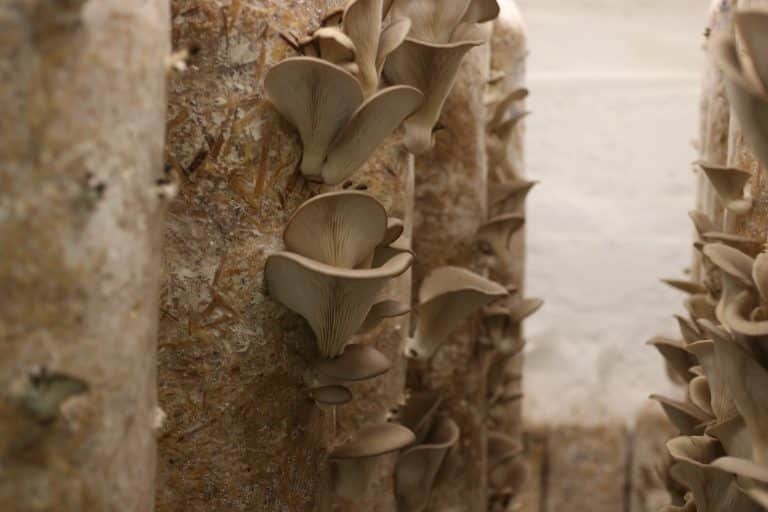
We grow our mushrooms on our farm in Schleedorf, in old fruit cellars. They grow on straw and sawdust.
What has fascinated us from the start is that you can produce high-quality food in very little space, in rooms that are hard to use for anything else. Other businesses see these residues as an extra cost. We’re amazed every day at how quickly the mushrooms turn them into something completely new.
Our mushroom cultivation process page explains each step. There’s also a long interview with Sebastian Reindl on Salzburg 1 (in German).
Yes. Our mushrooms are certified organic by the Salzburg control body (SLK-501), and we work closely with Bio Austria. We’re happy to send you the certificate on request.
Courses and coaching
Our Low-Tech Mushroom Farm one-on-one coaching is held in English, at our farm or online. Our other workshops are held in German.
You can see what we offer on our courses page.
Coaching dates are arranged individually. Send us a message through the contact form, email office@stoffn.at or call +43 664 750 936 04.
The one-on-one coaching is for anyone planning their own mushroom production, on a small to medium scale.
If you speak German, there are two workshops to choose from. Deine Pilzzucht für Zuhause is for beginners. Aufbau deiner eigenen Low-Tech-Pilzfarm is for people who already have some experience or want to grow mushrooms to sell.
We provide all the equipment and materials. Please bring something for lunch; we have small snacks and drinks.
Part of the workshop takes place outdoors, so dress for the weather.
You can cancel free of charge up to 14 days before the course starts. After that, the cancellation fee is 50% of the course fee. If you cancel within 48 hours of the start, the full course fee is due.
You’re welcome to send someone in your place. You can change your date up to 7 days before the course starts.
By registering, you accept our terms and conditions.
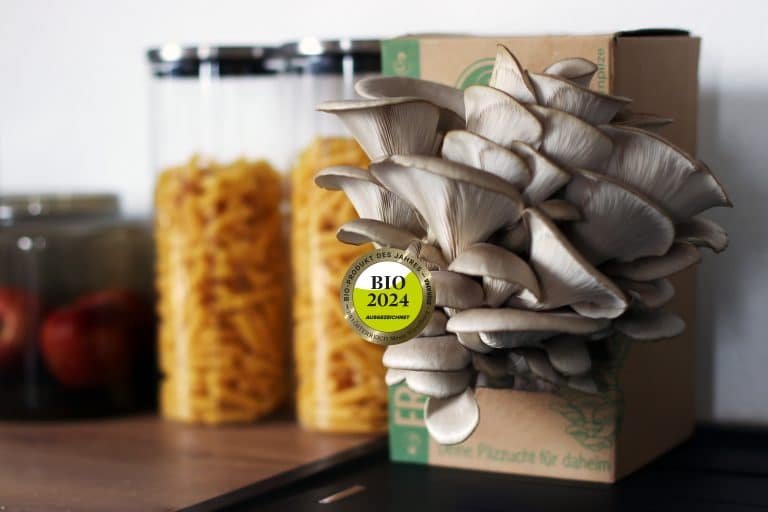
Fresh Mushroom Box
The box contains a living organism, so we recommend starting it as soon as it arrives. If you can’t, keep it in the fridge or somewhere cool and dry, out of direct sunlight, for up to 3 months.
Mushrooms may start growing in the box during storage. That can’t be ruled out, and you can still use the box as normal.
If the substrate bag is white, you’re looking at the oyster mushroom’s mycelium and everything is fine.
If something of another colour is growing on the bag, it may be mould. Please email a photo to office@stoffn.at.
After the first, second or third harvest, mould will eventually form, as it does on other foods. By then at the latest, compost the substrate or put it in the organic waste.
No, the bag should stay in the box.
If the substrate is very dry after the second or third harvest, you can take the bag out and place it in a bowl of water for 6–8 hours, with the “X” facing down. The substrate soaks up moisture again, and you may get another harvest.
We guarantee one harvest. If no mushrooms grow, please email a photo of your box to office@stoffn.at. We’ll try to help or replace the box.
Depending on the room and how you care for the box, you may get 2–4 more harvests. After that, take the substrate block out of the box and the plastic bag, bury it in the garden and water it well. With a bit of luck, you’ll harvest more mushrooms there in spring and autumn.
The contents of the substrate bag make a valuable flower fertiliser and can be composted. You can also put the substrate in the organic waste.
It’s made of sawdust, wheat bran, gypsum and water, and it’s 100% organic and vegan.
Spray a little water behind the flaps of the “X” twice a day, and later onto the growing mushrooms.
In a dry home, often one with underfloor heating, spray the mushrooms and substrate 3–5 times a day. While they’re growing, mushrooms are more likely to be too dry than too wet, so you can hardly spray too much.
The flaps help keep moisture in the bag, so they should stay on.
If you’ve cut them off by accident, tape a piece of plastic film over the window instead. Lift it slightly whenever you spray the bag, and later the mushrooms.
Most boxes do produce a second harvest, usually 2–4 weeks after the first. A third often follows, at the earliest 1–2 months after the second. Both depend a lot on the conditions in the room.
We guarantee one harvest. If that doesn’t grow, you’ll of course get a new box straight away.
Yes. Lay the box on its side with the window facing up, then use a spoon to carefully drip water over the substrate or the mushrooms.

Spawn, dowels and mushroom beds
It depends on many factors, including how much spawn you use, the type of mushroom and the conditions in the room.
Ideally, keep it in a clean fridge at 2–4 °C.
Spawn that is older and densely grown can usually still be used. The first sign of breakdown is a yellow or colourless liquid, and you can still use it at this stage.
After some time, autolysis sets in: the spawn breaks itself down and the grains no longer hold together. At that point, you need to throw it away.
Our guide to growing mushrooms on logs explains it step by step.
Our mushroom bed guide explains it step by step.

Fresh mushrooms: buying, cooking and storing
We sell them for pick-up from the self-service fridge at our farm store. There are normally mushrooms in the fridge, unless a lot of people have come by at short notice.
To be sure, send us a message or call +43 664 750 936 04.
Mushrooms develop the most flavour when you fry them briefly over high heat. For a quick meal, combine them with other vegetables, rice or noodles.
We’ve collected plenty of ideas in our recipes. Our favourites are the oyster mushrooms in a cheese and egg coating and the fried garlic mushrooms.
That depends on how much you like mushrooms, but here’s a guide:
As a main dish, a 500 g pack is plenty for 2 people, and 1000 g is a good choice for a family. As a side dish, we suggest 200 g for 2 people and 500 g for a family.
Keep them uncovered in their cardboard tray in the fridge.
Please cook them within a week of buying them.
Yes. This “white mould” is the oyster mushroom’s mycelium, which sometimes forms on the surface of the mushroom. They’re safe to eat.
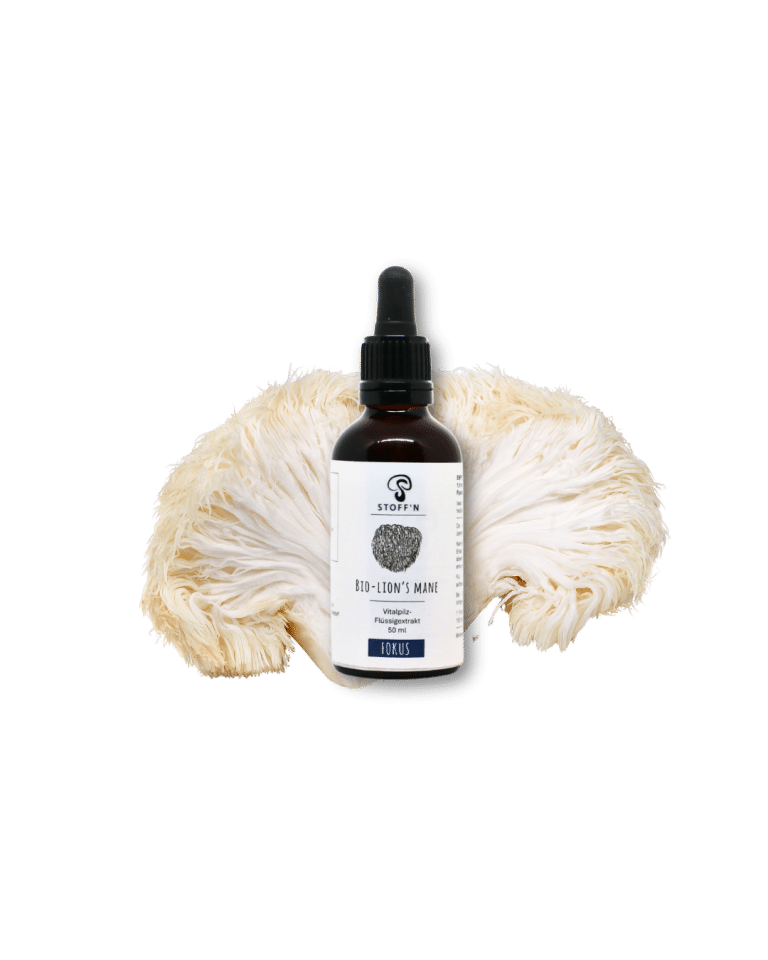
Functional mushroom extracts
Our liquid extracts are now sold in our new shop, TaoVitalis.com.
We first extract the alcohol-soluble substances from the mushrooms, then the substances that dissolve in hot water. Only the fibre is left behind.
The extraction settings vary by mushroom type. They were first taken from Chinese scientific studies and then developed further with European pharmacists.
We produce the cultures for Lion’s Mane, Reishi, Shiitake and Pleurotus ourselves, then grow them on our own farm and on a partner farm in a neighbouring village.
Chaga is wild-harvested in Scandinavia. Cordyceps comes from a European partner farm.
Most research and traditional use relate to the fruiting body, the part of the fungus we think of as the mushroom. Growing it takes much more work than growing mycelium alone.
Cordyceps is the exception: our Cordyceps extract is made from mycelium.
Mushrooms readily absorb radioactivity and toxins from their environment. Products made from mushrooms grown under lower environmental standards can exceed European limits.
A leading European laboratory regularly tests our extracts for heavy metals, bacterial contamination and more than 200 pesticides. We’re happy to send you the lab reports on request.
Alcohol is a very effective solvent. It extracts far more from the mushrooms than alternatives such as glycerine or vegetable oils. It’s also a good natural preservative, so the extract keeps for longer.
A daily serving of 1.65 ml contains 0.375 ml of alcohol.
Pleurotus (oyster mushroom), Reishi, Lion’s Mane and Chaga can be found in local forests, though only rarely. Shiitake originally comes from Japan and isn’t native here. The Cordyceps sinensis we offer originally grows in the Himalayas.
Pleurotus, Lion’s Mane and Shiitake are popular edible mushrooms that you can prepare in many ways.
Reishi, Chaga and Cordyceps were traditionally made into tea. Reishi and Chaga in particular are very hard, so you can’t chew them, and they can only be ground with special machines.
Please speak to your doctor first.
The extracts can interact with certain medicines. Please check with your doctor or pharmacist before taking them.
If you notice any physical reaction after taking an extract, stop taking it and speak to your doctor.
Still have a question?
Send us a message through our contact form or email office@stoffn.at. We’re happy to help.