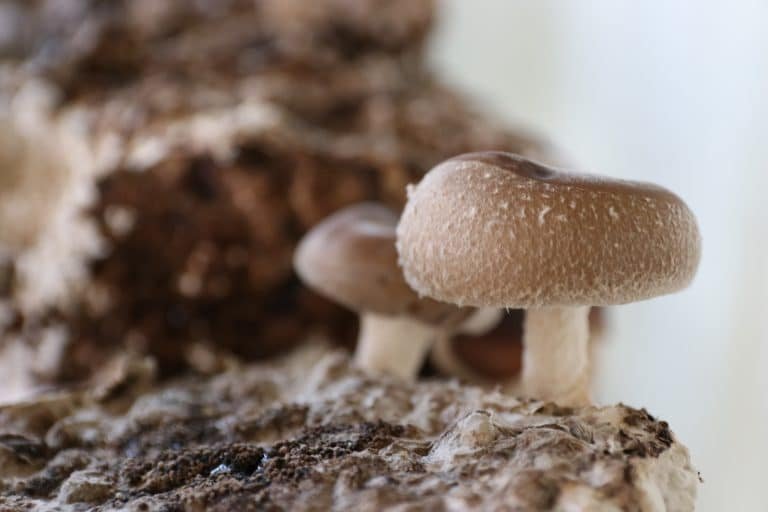

Shiitake mushrooms have been part of East Asian cooking for centuries, and today they’re one of the most widely grown mushrooms in the world. They’re easy to love: deep in flavour, meaty in texture and very good dried as well as fresh.
This guide covers what shiitake are, how they taste, how to cook and store them, and how to grow your own.
What are shiitake mushrooms?
Shiitake (Lentinula edodes) grow on dead hardwood. The Japanese name combines shii, a tree related to oak and beech, with take, meaning mushroom. So shiitake simply means “mushroom of the shii tree”.
Shiitake are among the world’s leading cultivated mushrooms, and some recent estimates put them in first place. They grow well on logs and on pressed sawdust blocks, which is one reason they’ve become so widespread.
Appearance, texture and taste
The cap is dark brown to chestnut and slightly domed. On young mushrooms, the edge is still curled under, which is a good sign of freshness. The surface feels velvety, and very fresh mushrooms sometimes have a fine white coating. This is usually mycelium, but throw the mushrooms out if they’re slimy or smell off.
The stem is firmer than on many other edible mushrooms, so it’s usually removed. Don’t throw it away, though, because it makes a good base for stock.
What do shiitake mushrooms taste like?
Shiitake taste deep, savoury and slightly smoky, with plenty of umami. The flavour is much stronger than that of button mushrooms. Dried shiitake taste even more intense, because drying concentrates the flavour. That’s why East Asian cooks often use them as a natural seasoning.
Cooked shiitake become tender with a slightly chewy, almost meaty bite, which makes them especially useful in plant-based dishes. For other species, see our guide to edible mushrooms.
Where shiitake come from
Shiitake cultivation is thought to have begun in China during the Song dynasty, around 1000–1200. Tradition credits a grower known as Wu San Kwung with developing log cultivation, including striking logs to encourage fruiting. Dates and details vary between sources.
In Japan, log cultivation grew into a true industry from the 17th century. Shiitake reached Europe much later, in the 20th century. At first they were mostly found in Asian shops, then in restaurant kitchens, and eventually in ordinary supermarkets.
Shiitake nutrition
Shiitake are low in calories. These are approximate values for fresh mushrooms:
| Nutrient | Per 100 g, fresh |
|---|---|
| Energy | about 34 kcal |
| Protein | about 2.2 g |
| Carbohydrates | about 6.8 g |
| Fibre | about 2.5 g |
| Fat | about 0.5 g |
Shiitake also contain B vitamins, particularly pantothenic acid (B5), as well as copper, selenium and zinc. Like other mushrooms, they contain beta-glucans, a type of fibre found in their cell walls. Their best-known beta-glucan is called lentinan.
Shiitake and vitamin D
Mushrooms can form vitamin D2 when exposed to UV light. The amount depends heavily on how they were grown and handled, so it varies a lot. Fresh shiitake placed in the sun for a few hours with their gills facing up can increase their vitamin D content considerably.
How to cook shiitake mushrooms
Always cook shiitake thoroughly. Raw or undercooked shiitake can cause a rare skin reaction (see below).
Fresh shiitake need very little: fry them in butter or olive oil until they’re browned and cooked through, then add a little salt. They also work well in stir-fries, soups, ramen and noodle dishes, and they go especially well with soy sauce, ginger, sesame oil and garlic.
Dried shiitake make an excellent base for stock. Together with kombu seaweed, they make a classic vegetarian Japanese dashi.
Fresh or dried?
Fresh shiitake are ideal when you want texture and juiciness. Dried shiitake keep longer and have a more concentrated flavour, so a small amount goes a long way in soups, sauces and braises.
How to store and prepare shiitake
Fresh shiitake
Don’t store fresh shiitake in plastic, because it traps moisture and makes them spoil faster. Keep them in a paper bag in the fridge, where they’ll last about five to seven days. Before cooking, simply wipe them with a damp cloth.
Dried shiitake
Keep dried shiitake somewhere cool, dark and dry. In an airtight container, they’ll last for up to a year. To rehydrate them, soak them in warm water for about 20 minutes, or longer for thick caps. Don’t throw away the soaking water. Strain it and use it as a flavourful stock.
Is shiitake safe to eat?
Fully cooked shiitake are well tolerated by most people, but there are two things to know.
Shiitake dermatitis
In rare cases, eating raw or undercooked shiitake causes a rash of itchy, whip-like red streaks. It usually appears between one and five days later and generally clears up by itself. Lentinan, which breaks down with heat, is thought to be the cause. Cooking shiitake thoroughly is the best way to avoid it. If you get a rash, see a doctor.
Allergies and extracts
If you’re allergic to mushrooms, avoid shiitake. If you’re pregnant, have a medical condition or take medication, ask your doctor before using a concentrated mushroom extract.
Growing your own shiitake
You can grow shiitake on hardwood logs or on sawdust or pellet substrates. Our guides cover both approaches:
In our shop, you’ll find organic shiitake inoculation dowels for logs and organic shiitake spawn for substrate.
Shiitake FAQ
Can you eat shiitake stems?
Yes, but they’re tough, so most people remove them. They’re great for adding flavour to stock.
Can you eat shiitake raw?
It’s best not to. Raw or undercooked shiitake can cause shiitake dermatitis in rare cases, so always cook them thoroughly.
Can you eat shiitake every day?
Shiitake are an everyday food in many East Asian cuisines. As with any food, it’s best to eat them as part of a varied diet, and to cook them thoroughly.
How long do fresh shiitake last?
About five to seven days in a paper bag in the fridge. Throw them out if they turn slimy or smell sour.
How long should I soak dried shiitake?
About 20 minutes in warm water is enough for good texture, though thick caps may need longer.
Where can I find shiitake extract?
You’ll find organic shiitake liquid extract and other mushroom extracts at TaoVitalis.
Want to grow your own?
From spawn and dowels to practical workshops in Schleedorf, Stoff’n has what you need to get started.