By Sebastian Reindl · Stoff’n e.U., Schleedorf · about 8 min read
It was one of those moments when you wish someone had quickly explained what was actually going on. I stood in front of my first straw substrate with a bag of grain spawn and thought: “This goes in, job done.” What I hadn’t considered was that without clean inoculation, the controlled introduction of mycelium into the substrate, my straw was an open invitation to everything except oyster mushrooms.
Inoculation is at the heart of mushroom growing. It’s the moment you introduce spores or mycelium into a suitable substrate, and it plays a big part in whether your crop succeeds or ends in a colourful display of mould. In this guide, I’ll explain the methods, when to use each one and what I’ve learned in practice.
What does inoculation mean in mushroom growing?
In nature, mushroom spores land by chance on decaying organic material, and if conditions are right, new mycelium grows. As growers, we take over this role by deliberately introducing spores or already grown mycelium into a prepared substrate. This is called inoculation.
It sounds simple, and in principle it is. But cleanliness, technique and timing all depend on the substrate, the species and the growing method. If you understand that, you’ve already got the most important basics.
There are two basic approaches: dry inoculation with grain spawn, dowel spawn or sawdust spawn, and liquid inoculation with liquid culture or spore solution. Which one suits you depends on what you plan to do.
Dry or liquid: the two methods compared
Dry inoculation
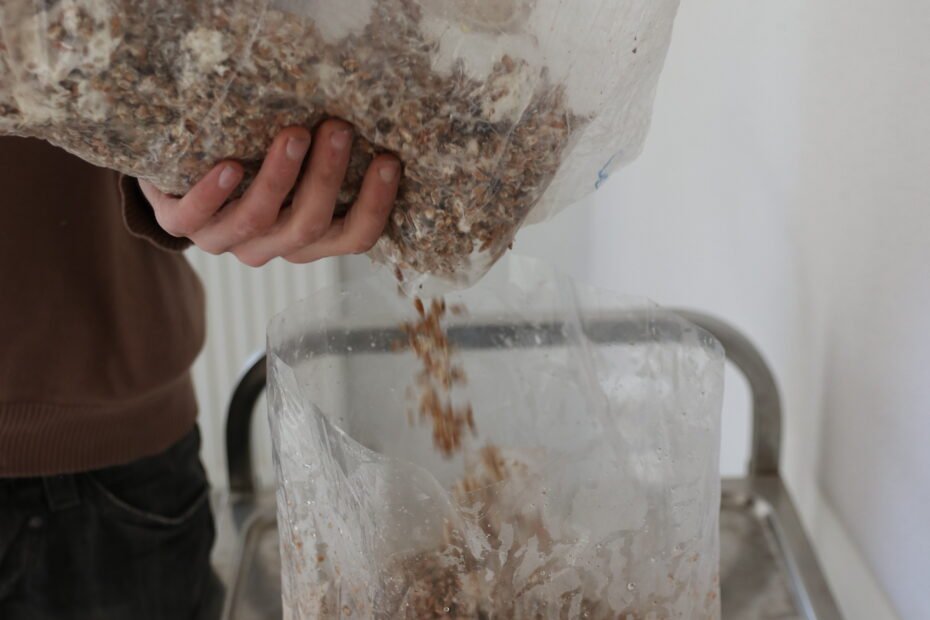
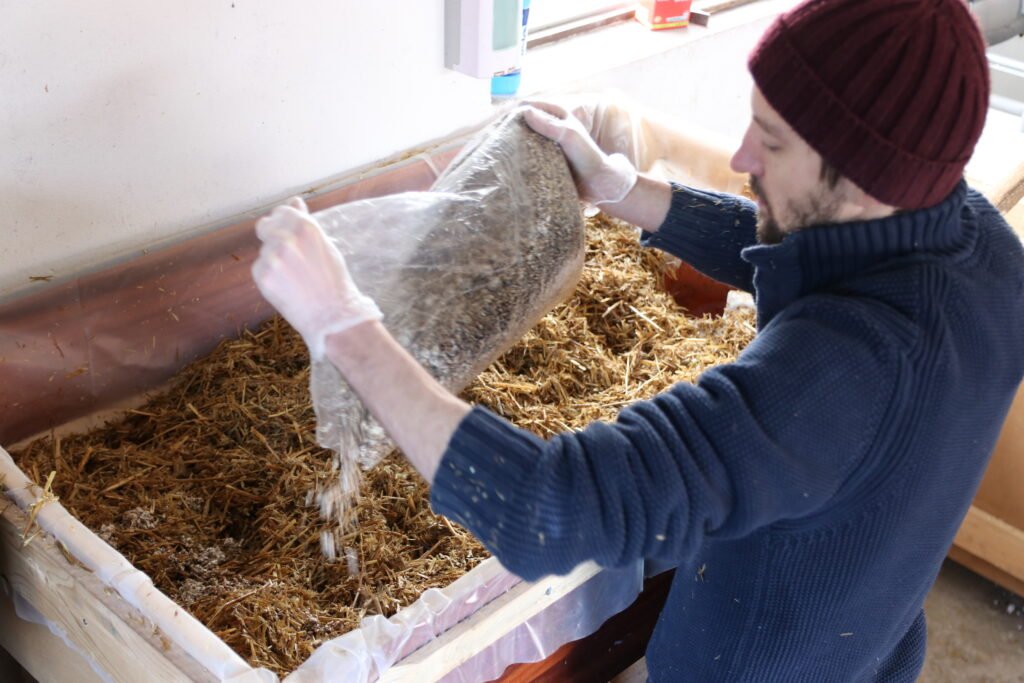
Dry inoculation uses solid spawn: grain spawn (mycelium on grain), dowel spawn (mycelium on wooden dowels) or sawdust spawn. You mix it straight into your substrate, or for logs, you press it into pre-drilled holes.
Grain spawn works especially well for straw substrates and indoor growing. The grains spread evenly, which gives the mycelium many starting points to colonise the substrate. For logs in the garden, dowel spawn is the more practical choice: hammer it in, seal it, done.
Dry spawn rates: On pasteurised straw, I work with 10–20% of the total weight, which is generous. Many growers do well with 5–10%. On sterile substrate, 5–10% is usually enough, which saves money but requires clean sterilisation.
Liquid inoculation
Liquid culture (LC) contains living mycelium in a nutrient solution, usually water with some honey or malt extract. You draw the solution into a syringe and inject it directly into a grain jar or filter bag. It’s very quick, and the mycelium spreads rapidly.
Spore solutions work in a similar way, but you start from spores rather than cloned mycelium. That means you don’t know exactly what traits the resulting mushroom will have: yield, growth habit and flavour can vary. For repeatable results on a farm, this isn’t an option. For hobby growers who like to experiment, it can be exciting.
The stages of inoculation: from culture to harvest bag
Inoculation doesn’t just happen once in mushroom growing, but at several levels. How far you go determines how many of these stages you’re involved in:
1. Culture: Mushroom tissue or spores are placed on agar (a growing medium in a Petri dish) or in liquid culture. Tissue gives you a clone of the parent mushroom. Spores give you a new, genetically varied culture.
2. Grain spawn: The agar or liquid culture inoculates sterilised grain. The mycelium grows through the grains and produces grain spawn, the universal “starter” for most growing methods.
3. Substrate: The finished grain spawn inoculates the actual growing substrate: straw, sawdust blocks or outdoor beds. Logs are usually inoculated with dowel or sawdust spawn.
If you buy ready-made grain spawn, you start at stage 3. For most hobby growers, that’s the most sensible starting point, and it’s where I started too.
What I’ve learned about inoculation, sometimes the hard way
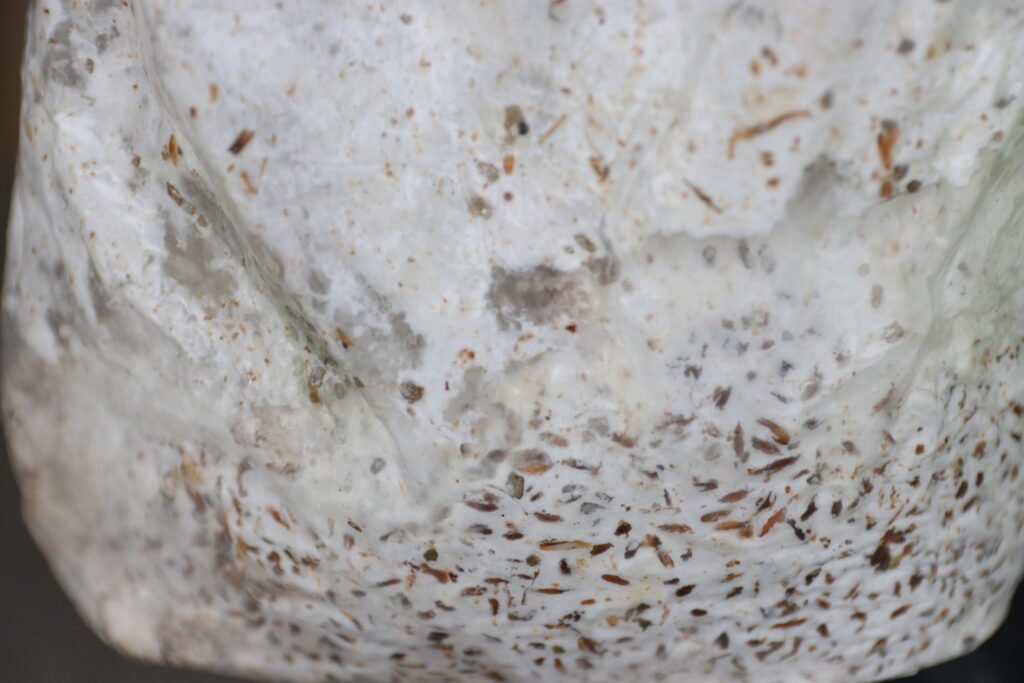
On the farm today, I only inoculate under controlled conditions when I’m working with grain spawn or sterile substrate. It wasn’t always like that. I used to think a clean table and gloves were enough, until Trichoderma taught me otherwise. Green mould on half a batch of grain spawn is an expensive lesson. Our mushroom contamination guide explains how to spot and prevent it.
Here are a few things I wish I’d known sooner:
Substrate temperature isn’t a detail. If you inoculate freshly sterilised substrate while it’s still too warm, you can kill the mycelium in the spawn before it gets going. I now always wait until it’s below 30 °C, and ideally at room temperature.
Spawn quality matters. Old or badly stored spawn colonises slowly, which gives competitors time. I prefer to order fresh and use it quickly.
Distribution beats quantity. There’s no point using a huge amount of spawn if it’s badly distributed. Mixing it in evenly works better than a large amount sitting on top.
Tip for hobby growers: Start with pasteurised straw and grain spawn. You don’t need a sterile box or laminar flow hood, just clean hands, a disinfected work area and fresh spawn. There’s enough room for error to see your first successes.
Tip for aspiring professionals: Invest early in clean working conditions, with at least a still air box for inoculating grain. It quickly pays for itself, because contamination rates fall and your results become more reliable.
Inoculating outdoors: logs and beds
Different rules apply outdoors. To inoculate logs, for shiitake or oyster mushrooms for example, I drill holes in a diamond pattern and insert dowel spawn, then seal them with wax. I don’t need sterile conditions for this, because a fresh, healthy log has plenty of natural protection.
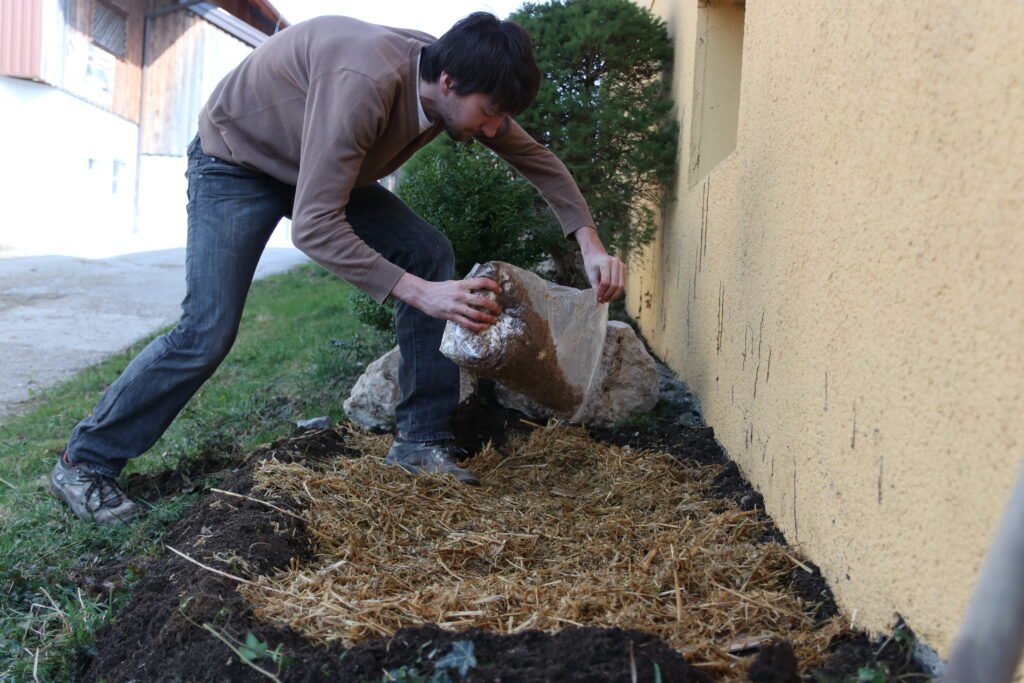
For garden mushroom beds, for example with wine caps or oyster mushrooms on wood chips, the layering method works best: alternate layers of substrate and spawn, press them down lightly, and cover. I use sawdust spawn rather than grain spawn here, because birds like to pick out the grain and disturb the bed.
Inoculation FAQ
Why is my mycelium barely growing after inoculation?
The most common causes are cold substrate (below 18 °C slows growth considerably), old or badly stored spawn, and too little fresh air during colonisation. Check all three before you give up. Often a warmer spot is all it takes.
How much spawn do I need? Is there a rule of thumb?
For pasteurised straw, many growers use 5–10% of the wet weight, and I plan on 10–20%. For sterile substrate, 5–10% is often enough. More spawn speeds up colonisation but also costs more. A higher rate makes sense for slow-growing species such as shiitake.
Do I really need a laminar flow hood?
For inoculating straw, no. For working with grain spawn or sterile substrate, it’s recommended, but a homemade still air box is fine to start with. A laminar flow hood is only worth it if you regularly inoculate larger quantities.
What’s the difference between a spore solution and liquid culture?
A spore solution contains spores, the “seeds” of the mushroom. Compatible spores first have to germinate and fuse before productive mycelium can grow. The result is genetically unique and varies. Liquid culture contains mycelium that has already grown, and if it comes from a clone, the result is predictable and repeatable. For serious growing, I only use liquid culture or agar cultures.
Ready for your first inoculated bag?
In our shop, you’ll find fresh organic grain spawn and dowel spawn from Schleedorf, straight from the farm, for hobby growers and professionals.
Read more: mushroom growing guides · all about grain spawn · workshops and courses in Schleedorf