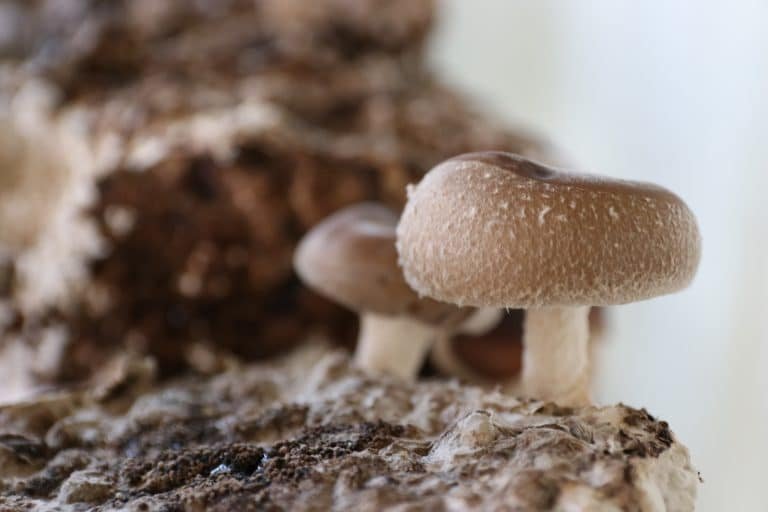
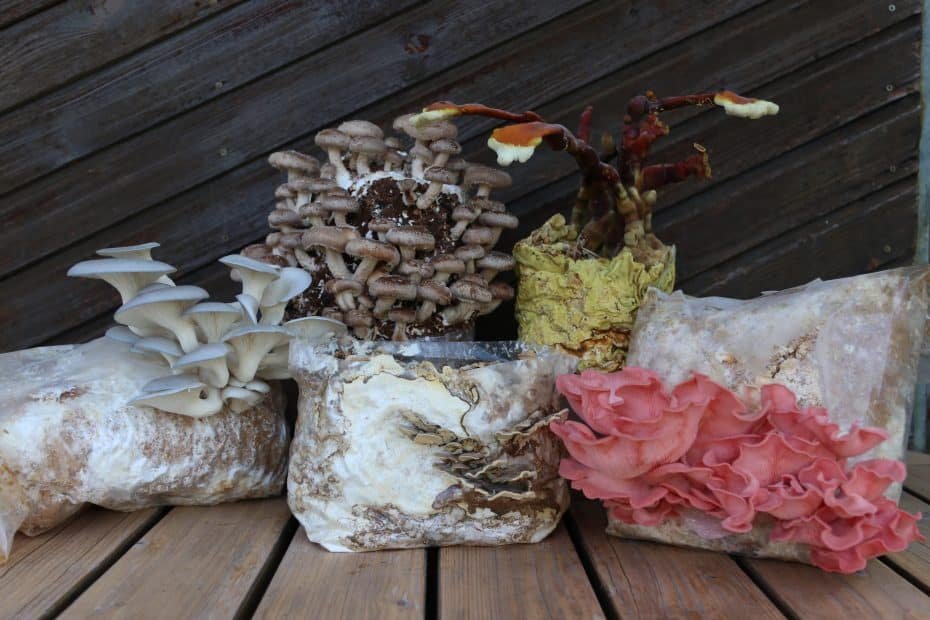
Mushrooms are one of the few foods you can grow in a flat with no soil, no garden and almost no extra energy. Better still, they grow on what agriculture leaves behind: straw, sawdust and other plant residues. At our organic mushroom farm in Schleedorf near Salzburg we have been doing this for years. In this guide we show you how to grow mushrooms indoors in a way that is easy, low-waste and safe, whether you start with a ready-made kit or mix your own substrate.
In short: how to grow mushrooms indoors
- Choose an easy species, such as oyster mushrooms.
- Mix spawn into a pasteurised plant substrate (for example straw pellets soaked in hot tap water) in a filter bag.
- Let the bag colonise at room temperature (20–24 °C) for about four weeks until it is completely white.
- Cut small openings, move the bag to a bright, humid spot out of direct sunlight and mist once a day.
- Harvest the whole cluster when the cap edges start to turn upwards, then compost the used substrate.
Why growing mushrooms indoors is sustainable
They turn leftovers into food
Most edible mushrooms you can grow at home are decomposers. In nature they break down dead wood and plant material. In cultivation, they do the same with agricultural by-products such as wheat straw, sawdust or grain husks. They don’t need farmland, and they don’t compete with crops grown for people. We explain this circular approach in more detail in our German article on mushroom growing on residues.
The used substrate becomes compost
Mushroom growing creates a by-product of its own: spent substrate. According to the EU-funded SMARTmushroom project, growing one tonne of mushrooms takes three to four tonnes of substrate, and Europe produces about 3.65 million tonnes of spent mushroom substrate every year (CORDIS, European Commission). The good news is that it is a valuable soil improver. The same project turned it into organic fertiliser pellets with up to 50 % organic matter (CORDIS results). At home it’s even simpler: your used block goes into the compost, a raised bed or the organic waste bin.
The substrate decides the footprint
Not all substrates are equal. A 2024 study grew oyster mushrooms on different types of straw and estimated emissions of 2.6 kg (soy straw) to 3.5 kg (wheat straw) of CO₂ per kilogram of dried mushrooms. Protein content also varied, from 16.8 % to 23.2 % (Grimm, Sonntag & Rahmann, Studies in Fungi). For you this means local, organic, low-processed substrates are the better choice.
No peat, no grow lights, little heating
Commercial button mushrooms (champignons) are traditionally covered with a peat-based casing layer, and peat bogs store large amounts of carbon. A European life-cycle study found that alternatives such as bark, grass fibres or reused casing can replace peat with limited environmental impact, as long as yields hold up (Goglio et al. 2025, Science of the Total Environment). Oyster mushrooms, shiitake and lion’s mane don’t need a casing layer at all. They fruit straight from the bag or block. Mushrooms also need very little light (indirect daylight is enough), so there’s no need for grow lamps.
The best mushrooms to grow indoors
- Oyster mushroom (Pleurotus ostreatus): the easiest start. It colonises quickly and likes it cool for fruiting (about 5–20 °C), so it suits a cellar, a cool room or the colder months.
- Lemon and pink oyster mushrooms: these love warmth (about 16–25 °C) and are the right choice for summer or a warm home. Picking a species that matches your room saves heating.
- King oyster mushroom: firm, meaty and long-lasting. See our step-by-step guide to growing king oyster mushrooms.
- Shiitake and lion’s mane: slower and a bit more demanding, but very rewarding. Read more in our shiitake guide.
Three ways to get started
1. Ready-to-fruit grow kit (easiest)
A fully colonised block only needs opening, misting and harvesting. It’s ideal if you want to see how mushroom growing works before investing time. Take a look at our mushroom growing kits.
2. Spawn and straw pellets in filter bags (low-tech, low-energy)
This is our favourite method for beginners who want to do it themselves. You pour hot tap water onto organic straw pellets, let them cool and mix in the spawn. You don’t need a pressure cooker or sterile lab. Our Home Mushroom Growing Kit includes everything you need, and the kit guide walks you through each step.
3. Buckets or coffee grounds (for the curious)
Once you have some experience, you can grow oyster mushrooms in buckets or on coffee grounds. Coffee grounds must be used fresh, ideally within one to two days, because the risk of mould rises quickly after that.
Step by step: your first indoor harvest
- Prepare the substrate: pour about one litre of hot tap water onto each bag of straw pellets and let it cool for 12–24 hours.
- Inoculate: once the substrate is below 25 °C, mix in the spawn with clean hands or gloves. Heat above 25 °C can damage the live spawn.
- Colonise: close the bag above the filter and keep it at 20–24 °C for about four weeks, until the substrate is completely white.
- Start fruiting: cut 4–8 small crosses (about 2 cm) into the plastic. Move the bag to a bright spot (indirect light, no direct sun) with high humidity and fresh air, and mist the openings once a day.
- Harvest: about 5–7 days after the first mushrooms appear, or as soon as the cap edges start turning upwards, twist off the whole cluster.
- Repeat: after one to two weeks of rest and regular misting, most bags give two to four flushes in total.
Seven tips for a low-waste mushroom garden
- Match the species to the season. Grow oysters in the cool months and warmth-loving lemon or pink oysters in summer, instead of heating or cooling a room.
- Use hot tap water, not a stove. For straw pellets, this is all the treatment you need.
- Buy regional, organic spawn. Short transport keeps the spawn fresh and vigorous. Store it in the fridge and use it within about three months.
- Refill instead of rebuying. Pellets, spawn and filter bags are available separately, so you don’t need a new kit every time.
- Compost the spent substrate. Put it in the compost or raised bed, or use it as mulch. It’s a valuable organic fertiliser.
- Harvest on time. Young mushrooms taste better, keep longer and release fewer spores.
- Prevent rather than throw away. Clean hands, clean tools and cooled substrate prevent most failed batches. Our article on common mushroom growing mistakes helps you avoid them.
Safety: growing mushrooms indoors without risk
Growing mushrooms is a joyful hobby, and a few simple rules keep it that way.
- Spores and breathing: oyster mushrooms release a lot of spores, especially when the caps flatten out. People who handled large amounts of oyster mushrooms in closed rooms have developed allergic lung reactions (see this case report from Greece). A bag or two at home is a very different scale, but it’s still sensible to air the room regularly, not to fruit mushrooms in your bedroom and to harvest before the caps flatten. If you develop a cough, shortness of breath or fever while growing, stop and see a doctor.
- Mould: green, black or pink spots mean contamination. Don’t open the bag indoors. Dispose of it closed, in the residual waste bin. Learn more in our guide to mushroom contamination.
- Only eat what you planted: if anything unfamiliar grows on your substrate, don’t eat it. Just as in the forest, eat only mushrooms you can identify with absolute certainty. Our article How to Tell if a Mushroom Is Poisonous explains why rules of thumb don’t work.
- Cook them: cultivated mushrooms, oysters included, should be eaten well cooked, not raw.
Frequently asked questions
Can I grow mushrooms in a flat?
Yes. A bright bathroom, kitchen corner, cool hallway or cellar works well. What matters is indirect light, high humidity, fresh air and the right temperature for the species.
Do mushrooms need light to grow?
They don’t need light to grow mycelium, but they do need some indirect daylight (around 800–1,500 lux) to form well-shaped fruiting bodies. A spot near a window, out of direct sun, is enough. No grow lamp is needed.
How long until the first harvest?
With a straw pellet kit, allow about four weeks for colonisation and one to two weeks more for fruiting. A ready-to-fruit block can produce mushrooms within a couple of weeks.
What do I do with the substrate afterwards?
Compost it, dig it into a raised bed or use it as mulch. Spent mushroom substrate adds organic matter to the soil.
Is growing your own mushrooms really more sustainable?
Home-grown mushrooms skip packaging and transport, and they grow on plant by-products. To get the most out of it, choose regional, organic substrate, avoid extra heating by matching the species to your room, and compost the spent substrate.
Conclusion: small bag, big impact
Growing mushrooms indoors is one of the easiest ways to produce fresh, regional food at home. All you need is a little patience, a bright corner and clean hands. If you’d like to start, our grow kits are the simplest way in. If you want to go deeper, from making your own substrate to running a small farm, join one of our mushroom growing courses in Schleedorf.
Sources
- European Commission, CORDIS: SMARTmushroom project fact sheet
- European Commission, CORDIS: A growing opportunity: turning mushroom substrate into fertiliser (2021)
- Grimm D., Sonntag E., Rahmann G. (2024): Oyster mushroom cultivation on cereal and legume straw of poor feed quality. Studies in Fungi 9.
- Goglio P. et al. (2025): Environmental impact of peat alternatives in growing media for European mushroom production. Science of the Total Environment 964.
- Pneumon: Hypersensitivity pneumonitis in a Pleurotus mushroom grower (case report, Greece)
- Cultivation values from the book Faszination Pilzzucht by Sebastian Reindl (Stocker Verlag) and our own practice at Stoff’n.