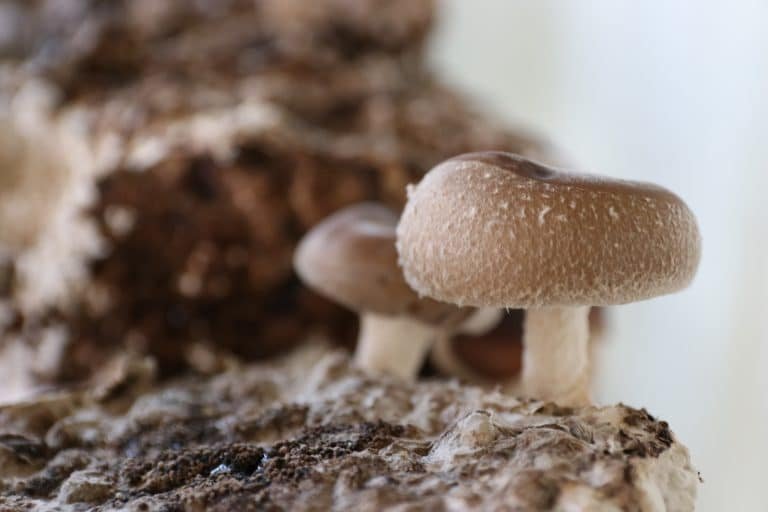

The shaggy ink cap grows by the roadside, in city parks and sometimes right outside your front door, yet it rarely reaches anyone’s plate. This guide explains what makes Coprinus comatus, also known as shaggy mane or lawyer’s wig, so special, how to recognise it and how to cook it before it dissolves.
Safety first: This guide is for general and culinary interest, and it can’t replace expert identification. Never eat a wild mushroom unless you’re completely sure what it is. If in doubt, ask a local mushroom expert, or don’t eat it.
What is a shaggy ink cap?
The shaggy ink cap is a fine-flavoured edible mushroom, as long as you find and cook it at the right moment. That’s the heart of its story. It can go from fresh to unusable in a matter of hours, so you can’t hesitate. Once you’ve eaten a good one, you’ll understand why it’s worth the hurry.
Its names describe its most obvious features: a shaggy, scaly cap and the black, ink-like liquid it turns into at the end of its short life.
| Feature | Details |
|---|---|
| Scientific name | Coprinus comatus |
| Family | Agaricaceae |
| Other names | Shaggy mane, lawyer’s wig |
| Season | Late spring to late autumn, especially after rain |
| Edibility | Excellent when young, with a closed cap and white gills |
| Home growing | Possible, but harder than oyster mushrooms |
How to identify a shaggy ink cap
The cap
Young mushrooms have a closed, cylindrical cap that looks more like a small rocket than a typical mushroom. It’s whitish and covered in brownish, upturned scales, which gave it the name shaggy mane.
As it matures, the cap opens into a bell shape and starts to liquefy from the edge upwards, turning into a black, inky mass. This process, called autodigestion, helps the mushroom release its spores. Young, edible mushrooms typically have a cap 5–15 cm tall and 3–5 cm wide.
Stem and gills
The stem is slim, hollow and white to slightly yellowish, with a loose ring that often slips down or disappears. The gills are white and tightly packed when young. They then turn pink, grey and finally black, so their colour shows how mature the mushroom is.
Lookalikes
The shaggy ink cap is quite distinctive, but inexperienced foragers should know these species.
Common ink cap (Coprinopsis atramentaria)
This is the most important one to know. It contains coprine, which can cause flushing, nausea and a racing heart when combined with alcohol, even if you drink up to about three days after eating it. Its cap is smoother, less scaly and grey-brown. The shaggy ink cap isn’t known for this reaction, which is why correct identification matters.
Glistening ink cap (Coprinellus micaceus)
This one is much smaller and usually grows in clusters on or near wood. Young caps are dusted with fine, glistening particles.
Green-spored parasol (Chlorophyllum molybdites)
This species is rare in central Europe but matters in warmer regions, because it can cause severe stomach upset. It has a spreading cap and greenish spores.
What does a shaggy ink cap taste like?
It’s mild and lightly earthy, with a fine, almost creamy mushroom flavour and gentle umami. When picked young, the flesh is tender and juicy, with an almost buttery softness. If you like oyster mushrooms, you’ll feel at home with it, although it’s even more delicate.
Where and when it grows
The shaggy ink cap lives on dead organic matter in the soil and isn’t tied to particular trees. It appears on roadsides, park lawns, gravel paths, freshly mown meadows, gardens and near compost, and it has even been known to push through asphalt.
It’s found across the northern hemisphere, and it has also become established elsewhere, including Australia and New Zealand. In China, it’s grown commercially.
The season starts in late spring in some regions and peaks in autumn. Weather matters more than the month: after heavy rain, shaggy ink caps can appear suddenly and in large numbers, then be gone within a day or two.
Where not to pick them
This matters more for this mushroom than for many others. Shaggy ink caps can absorb heavy metals such as mercury, cadmium and arsenic from the soil. Don’t pick them from roadsides, near old industrial sites or on chemically treated lawns. Choose places where you know the soil is clean, such as your own untreated garden.
Nutrition and research
Like most edible mushrooms, shaggy ink caps are low in calories and contain protein, fibre, B vitamins and potassium. Exact values vary with growing conditions and when they’re harvested.
Researchers have studied compounds in Coprinus comatus extracts, mainly in the laboratory and in animals. That’s a long way from showing any effect in people, and clinical evidence is largely missing. Treat this mushroom as a food, not a medicine.
How to cook shaggy ink caps
Because they spoil so quickly, shaggy ink caps always come first: you plan your meal around them, not the other way round. They need butter, good salt and a hot pan, not complicated sauces.
Cleaning
Don’t wash them. They already hold plenty of water, and any more makes them soggy. Brush them dry or wipe them with a slightly damp cloth, and cut away damaged parts. You don’t need to remove the scales.
Can you eat them raw?
No. Raw shaggy ink caps are hard to digest and can upset the stomach in some people. Cooking also brings out their flavour.
Pan technique
Moisture is the biggest challenge. If the heat is too low or the pan too full, they’ll stew rather than fry. Use high heat, cook a few at a time, and give them plenty of room. They’ll only start to brown once the water has evaporated.
Butter adds flavour but burns easily, so start with rapeseed oil and add a little butter towards the end.
Recipes and flavour pairings
The mild flavour goes especially well with shallots, a little garlic, dry white wine, cream, Parmesan, lemon zest, tarragon, thyme, eggs, chicken stock, sourdough, white fish and veal. Avoid strong flavours such as rosemary, sage, cumin, paprika and heavy red wine sauces, which overpower it.
Shaggy ink caps with butter, shallots and tarragon
Serves 2 · ready in 15 minutes
Ingredients: 250 g young shaggy ink caps, cleaned and sliced · 2 shallots, finely chopped · 1 tbsp rapeseed oil · 20 g butter · 50 ml dry white wine · 1 tsp fresh tarragon · salt, white pepper and the zest of half an organic lemon
- Heat a pan until very hot and add the oil. Add the mushrooms in a single layer.
- Fry for 2–3 minutes without stirring until golden underneath, then turn.
- Add the shallots and fry briefly. Add the wine.
- Reduce to a medium heat and stir in the butter.
- Season with tarragon, salt, pepper and lemon zest, and serve immediately.
Shaggy ink cap velouté with sour cream
Serves 4
Ingredients: 400 g young shaggy ink caps · 1 onion · 1 tbsp butter and 1 tbsp rapeseed oil · 600 ml chicken or vegetable stock · 150 ml cream · 2 tbsp sour cream · nutmeg, salt and white pepper · parsley and olive oil to serve
- Soften the onion in the butter and oil. Add the mushrooms and fry over a high heat until all the liquid has evaporated.
- Add the stock and simmer for 10 minutes.
- Add the cream and simmer gently for another 5 minutes.
- Blend and season with nutmeg, salt and pepper.
- Serve in deep bowls, stir in the sour cream, and finish with olive oil and parsley.
Growing shaggy ink caps
Shaggy ink caps can be cultivated, but they don’t suit standard home kits, because they need more specific conditions than oyster mushrooms. They prefer rich, slightly alkaline ground with plenty of compost, and commercial growers in China use a pasteurised mix of straw and compost.
For home growing, you’ll need a humus-rich garden bed or a large planter, regular watering, no strong direct sun and temperatures of about 15–25 °C. It takes weeks for the mycelium to establish. We don’t currently offer shaggy ink cap spawn, but you can find grow kits for easier species in our shop.
When to harvest
Harvest while the cap is still firmly closed and the gills are white. Once the cap opens into a bell or the gills turn pink, the window is closing. Black, inky edges mean it’s too late.
The practical rule is to pick in the morning and cook the same day. If you pass a known, clean spot regularly, you’ll soon learn when the mushrooms are at their best.
How to store shaggy ink caps
As a rule of thumb, cook fresh shaggy ink caps within 4–6 hours. In the fridge, loosely wrapped in kitchen paper, they may last up to 24 hours. Autodigestion can’t be stopped completely.
Cook first: the most reliable way to keep them
Fry them in butter until all the liquid has evaporated, let them cool, seal them in an airtight container and keep them in the fridge. They’ll keep for up to about 3 days and work well in soups, sauces, omelettes and pasta.
Freezing
Don’t freeze them raw, because they’ll lose almost all their texture. Fry them first until dry, freeze in portions, and use within about 3 months.
Dried shaggy ink caps
Drying weakens the delicate flavour that makes fresh ones special. Dried shaggy ink caps, which you may occasionally find in Asian food shops, are firmer after soaking and better suited to soups and braises.
Common mistakes
- Harvesting too late. Pink gills mean you’re almost out of time. Black edges mean it’s over.
- Storing them for too long. A shaggy ink cap left in the fridge until the evening may already be past its best. Cook it as soon as you can.
- Washing them. Extra water makes them soggy instead of golden.
- Crowding the pan. Too many mushrooms make steam, so they stew rather than fry.
- Using strong seasoning. Their mild flavour is the whole point.
- Picking from polluted ground. Heavy metals are a real concern with this species.
Shaggy ink cap FAQ
Is a shaggy ink cap edible?
Yes, when it’s young, with a closed cap and white gills, and when you’re certain of its identity and that it comes from clean ground.
Can you drink alcohol with shaggy ink caps?
The alcohol reaction is linked to the common ink cap, not the shaggy ink cap. The two must not be confused, so if you’re not completely sure which one you have, don’t eat it.
How long do shaggy ink caps last?
Ideally, cook them within 4–6 hours. They may last up to 24 hours in the fridge, or about 3 days once cooked.
Can you freeze shaggy ink caps?
Yes, but cook them first. Frozen raw, they lose nearly all their texture.
Can you buy shaggy ink caps?
You’ll rarely find them for sale fresh, because they spoil too quickly to transport easily.
A mushroom that won’t wait
You can’t stockpile a shaggy ink cap or put it off until tomorrow. That’s what makes it so unusual. Cook one well, with good butter, a little tarragon and warm bread, and you won’t forget it.
To read about other species, see our guide to edible mushrooms and our Meet the Mushrooms articles.