By Sebastian Reindl · Stoff’n e.U., Schleedorf · about 9 min read
Everyone who gets serious about growing mushrooms makes mistakes. So have I, and more than once. Green mould on the substrate, mycelium that just won’t grow, a missed harvest: it’s all part of the process. But some mistakes come up again and again, with beginners and experienced growers alike, and those are the ones I want to go through here.
This isn’t a theoretical list. It comes from what I’ve experienced on my farm in Schleedorf and what participants on my courses keep telling me.
Mistake 1: Trying to do too much at once
The most common mistake I see in newcomers is wanting to do everything themselves right away: spore prints, making their own grain spawn, sterilising substrate and building growing rooms, all in the first few weeks. It usually ends in frustration.
Mushroom growing is a craft you learn in stages. If you jump in at the deep end, you lose track of the variables that matter, and when something goes wrong, you won’t know where the mistake was.
For hobby growers: Start with a ready-made grow kit. You’ll learn about watering, humidity and when to harvest without having to master sterilisation at the same time.
For aspiring professionals: Start with bought-in spawn or ready-made kits. Learn to keep fruiting conditions steady first, before you take on making your own spawn.
Mistake 2: Impatience, and giving up too early
Mycelium grows when it’s ready, not when we want it to. I remember course participants who wanted to throw away their substrate after a week with no visible growth. Sometimes spawn just takes longer, especially if the temperature is off or the spawn rate was low.
In mushroom growing, patience isn’t just a virtue. It’s a technical requirement. Taking shortcuts risks contamination or substrate that isn’t fully colonised.
Mistake 3: Mixing up pasteurisation and sterilisation
A classic misunderstanding is that mushroom growing always requires full sterilisation under pressure. That’s really only true for nutrient-rich, supplemented substrates, such as oak sawdust with added bran.
Straw, hemp shives or commercial straw pellets can be pasteurised, which means heating them to about 70–80 °C. For robust species such as oyster mushrooms, that’s usually enough. Pasteurisation doesn’t kill everything: it greatly reduces competing moulds and bacteria, while some heat-tolerant microbes survive. Those give your mycelium some natural protection and a head start.
Mistake 4: Starting too fast with too little knowledge
Mistakes often come not from carelessness but from missing basic knowledge. You don’t need a degree, but a basic understanding of the mushroom life cycle helps enormously: how mycelium grows, what triggers fruiting and what the substrate has to provide.
Before you grow a new species, look up the specifics. What temperature does it need during incubation? During fruiting? How long does colonisation usually take? What are the warning signs of contamination in this species? This isn’t a luxury. It’s the basis for good decisions.
Mistake 5: Scaling up too soon
I did this myself. The first harvest went well, the second went well, so I immediately set up three times as much substrate. Then came the moment when everything fruited at once and I had nowhere near the capacity to harvest and sell it properly.
Scaling up doesn’t just mean “more substrate”. It means more cleaning, more precise climate control, more time management and, if you’re selling, more logistics. If you grow too fast, you lose control of quality.
My rule of thumb: only scale up once every step of your current process works reliably and repeatably, not just once but over several batches.
Mistake 6: Underestimating contamination
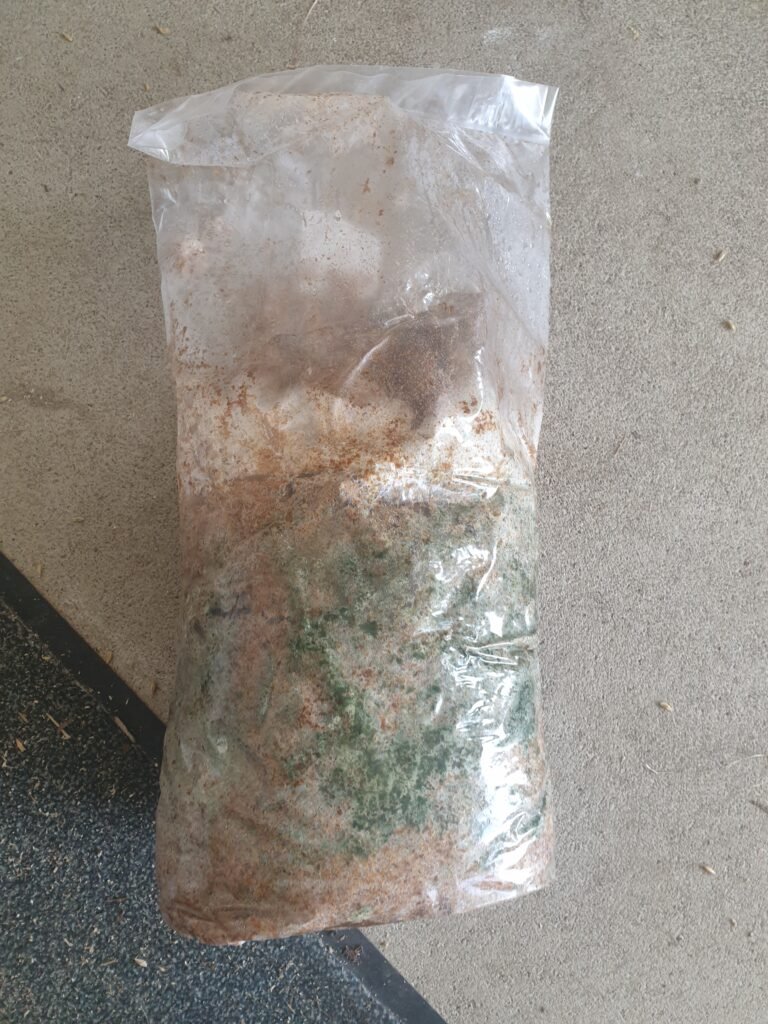
No conversation about growing mistakes is complete without contamination. Moulds, especially Trichoderma, and bacteria grow in the same conditions as mushroom mycelium, and usually faster.
What most people underestimate is that contamination doesn’t only come from the substrate. It can happen during inoculation, through too little air exchange during colonisation, through poorly cleaned tools, or simply in a moment of carelessness.
How do I recognise contamination?
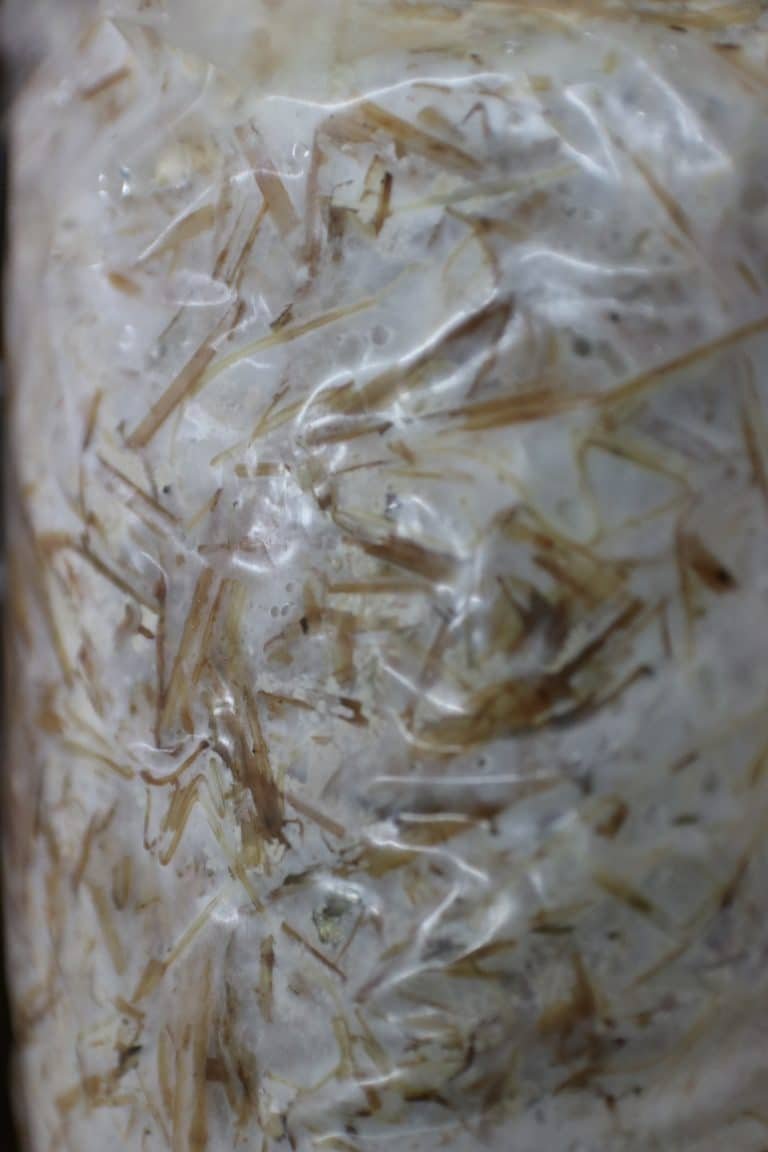
Healthy mycelium is usually white and fluffy and spreads evenly. Green, orange, grey or blackish patches are a warning sign. Slimy patches point to bacteria. If in doubt, take the substrate out rather than risk it spreading to other batches.
My anti-contamination routine: Wash my hands, disinfect work surfaces, flame tools or clean them with isopropyl alcohol, keep the inoculation room separate, and inoculate quickly without dawdling. For more detail, read our guide to mushroom contamination.
Mistake 7: Sterilising at the wrong temperature or for too little time
When sterilising nutrient-rich substrates, people often make one of two mistakes: too low a temperature or too short a time. Boiling isn’t enough. True sterilisation needs about 121 °C, which means pressure in a pressure cooker or autoclave.
For small volumes, allow at least 60 to 90 minutes under pressure. For bags and blocks, plan on longer: often 2 to 4 hours, depending on their size and the substrate. The next common mistake comes straight afterwards: inoculating in unclean conditions because you’re getting impatient.
Mistake 8: Poor spawn, or spawn of unknown origin
The quality of your spawn has a big influence on your harvest. Old spawn, contaminated spawn or strains with no clear origin can disappoint even in perfect conditions.
I recommend buying spawn from suppliers you can trust, ideally regional ones so that it arrives fresh. On our farm in Schleedorf, we produce our grain spawn and dowel spawn under organic certification.
My most personal mistake
In early 2022, I lost an entire batch of grain spawn. It wasn’t because of bad grain or faulty equipment, but because I lost concentration for five minutes while filling. Trichoderma makes no exceptions. The green colour appeared within days, and the whole batch was ruined.
What I took from that is that hygiene isn’t a tip you follow when you’re in a good mood. It’s the job. Since then, my inoculation routine has been much more structured, with a fixed order that I don’t shorten, however little time I have.
I always say this in my workshops too: the most expensive mistake in mushroom growing isn’t the one that costs you the most money. It’s the one you learn nothing from.
Mistake 9: Inoculating too hot, with too little spawn, or too dirty
There are three classic mistakes when inoculating mushroom substrate:
- Substrate still too hot: After pasteurising or sterilising, the substrate must cool completely to below 30 °C, and ideally to room temperature. If you inoculate too soon, you can kill the mycelium on first contact.
- Too little spawn: A low spawn rate slows colonisation and gives mould more time to get established. On pasteurised straw, 5–10% of the wet weight is common, and beginners should aim for the upper end or a little more. On sterilised substrate, 5–10% is usually enough.
- Poor hygiene during inoculation: If you have a flow hood or inoculation box, use it every time. If you don’t, at least work in a room with little dust, let the air settle first, and work quickly.
Mistake 10: Substrate problems: moisture, density and airflow
Not all substrates are the same. These are the most common problems:
- Too wet: Mould and bacteria thrive, and the mycelium struggles. Try the squeeze test: when you press a handful firmly, only a few drops should come out, not a trickle.
- Too dry: Mycelium grows slowly or not at all. You can add water later, but it’s hard to do without introducing contamination.
- Too dense, or no ventilation: Mycelium needs gas exchange. Tightly packed blocks or containers without air holes lead to a build-up of CO₂ and uncolonised areas in the centre.
- Too much supplement: Bran and other supplements increase yield, but also the risk of contamination. 5–10% of the dry weight is a good starting point.
Mistake 11: The wrong climate: CO₂, humidity, light and temperature
Mushrooms react sensitively to their surroundings. Too much CO₂, for example from a poorly ventilated fruiting room, leads to long, thin stems and small caps. Too little humidity makes mushrooms dry out and crack. Too much direct light also dries them out.
Mushrooms don’t need direct sunlight. Diffuse daylight or 12 hours of artificial light (colour temperature around 6,500 K) is plenty. The right temperature depends on the species: oyster mushrooms cope well with 15–22 °C, and shiitake fruit best at 12–18 °C.
Mistake 12: Harvesting at the wrong time
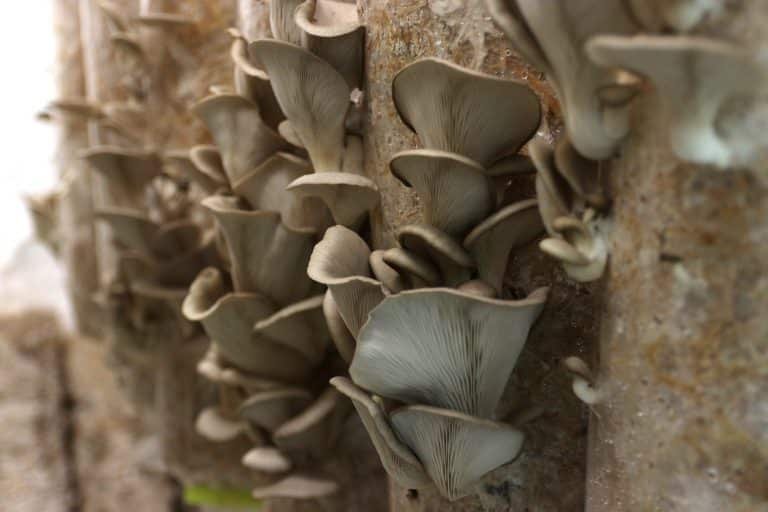
Harvest too early and you get small mushrooms and a lower yield. Harvest too late and the caps open out, spores are released and shelf life falls drastically. The mushroom has also begun to age, and its texture and flavour suffer.
For most edible mushrooms, the right moment is just before the edge of the cap flattens out, while it’s still curved slightly downwards. It takes a few harvests to get a feel for this. It’s better to be a little early than too late, especially if you’re selling your mushrooms fresh or giving them away.
Mushroom growing mistakes FAQ
How do I spot contamination early?
Soft, even white mycelium is normal. Colours such as green, orange, grey or black, or slimy patches, probably mean contamination. If in doubt, isolate the affected substrate immediately and throw it away.
Do I really need a pressure cooker?
For oyster mushrooms on straw or straw pellets, pasteurising with hot water is enough, so you don’t need one. For richer substrates with added bran, sterilising under pressure is important, because pasteurising isn’t enough.
Why is my mycelium growing so slowly?
The most common causes are a low temperature, too little spawn or substrate that’s too dry. Old or weak spawn can also play a part. Check temperature and moisture first, before giving up on the substrate.
Can I save anything from a contaminated batch?
That depends on how far it has spread. A small patch on a large block can sometimes be cut away, but the risk of it spreading remains high. If more than about 20% of the surface is affected, I’d throw out the substrate. Better to lose one batch than contaminate your whole fruiting room.
How much spawn do I need per kilogram of substrate?
As a guide, use 5–10% of the wet substrate weight, which is 50–100 g of spawn per kilogram. Beginners working with pasteurised straw can go a little higher, because more spawn means faster colonisation and less room for competitors.
Learn to grow mushrooms properly from the start
In my workshops in Schleedorf, I’ll show you step by step how to avoid common mistakes from the outset, from choosing the right substrate to harvesting at the perfect time. Or get started at home with one of our grow kits.