By Sebastian Reindl · Stoff’n e.U. · Schleedorf, Salzburg · about 12 min read
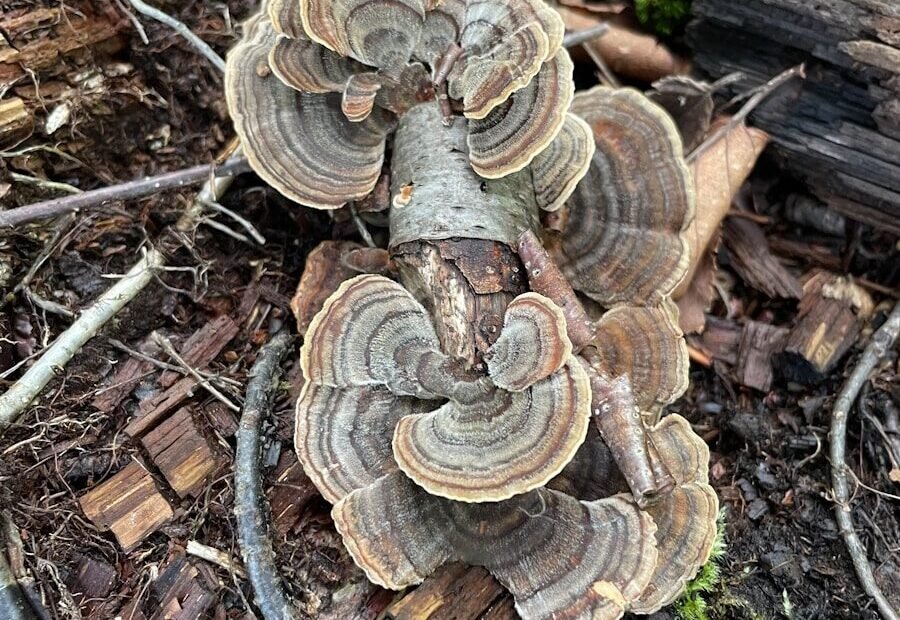
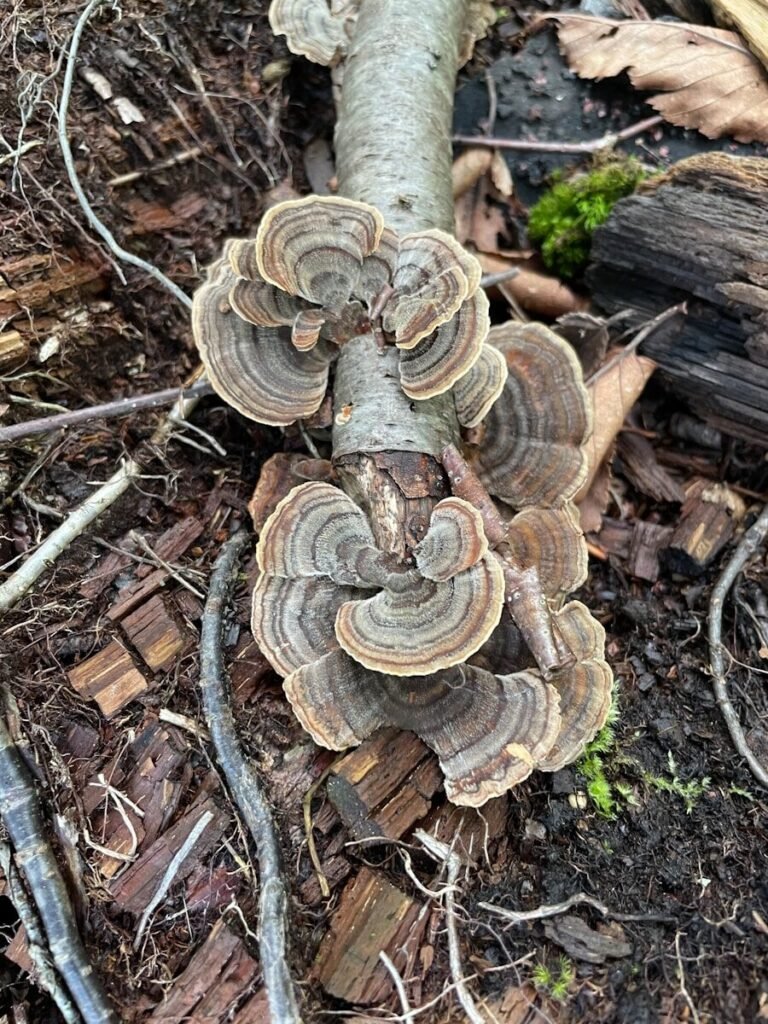
If you’ve ever walked through a mixed forest, you’ll know the sight: fan-shaped mushrooms with concentric bands of colour, growing in dense clusters on old tree stumps. Turkey tail, or Trametes versicolor, is one of the most common wood fungi in central Europe. Yet hardly anyone thinks of growing it themselves.
I was the same for a long time. On our farm in Schleedorf, we focused first on oyster mushrooms and shiitake, the classics with quick harvests and a clear market. Turkey tail came later, almost by chance. Today I’d say it’s one of the most rewarding mushrooms to grow, if you bring patience and know what to watch out for.
In this guide, I’ll show you how to grow turkey tail indoors in grow bags and outdoors on logs with dowel spawn. It includes specifics on substrate, temperature and humidity, and the most common mistakes, including my own.
What is Trametes versicolor, and why grow it?
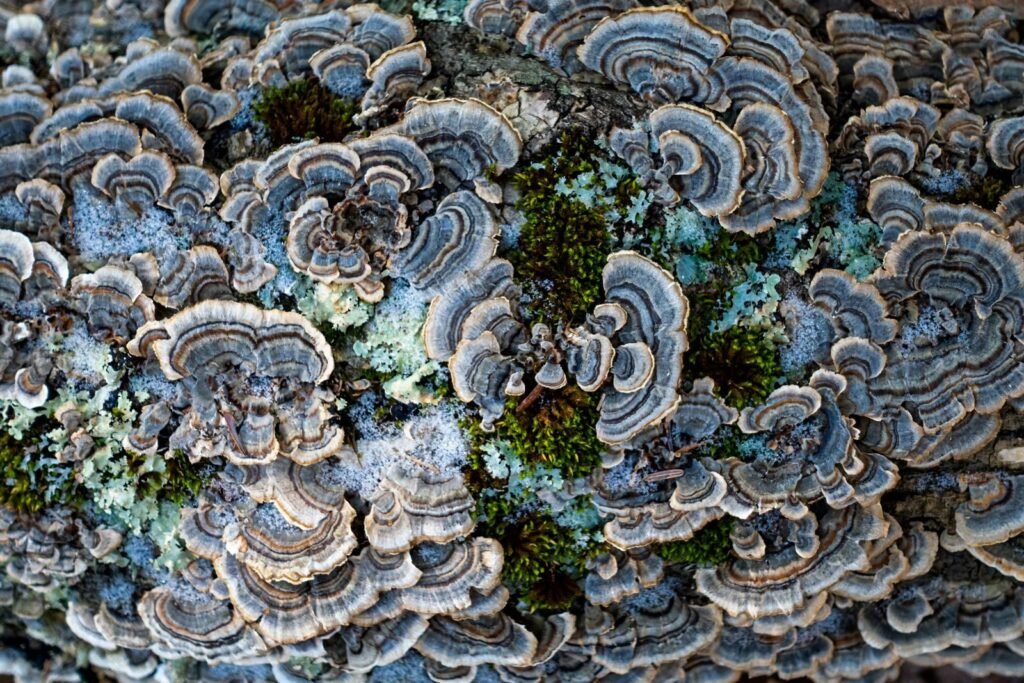
Turkey tail belongs to the Polyporaceae family, the polypores. Its fruiting body is flat and fan-shaped to semicircular, with concentric bands from white through brown to blue-grey, depending on light, moisture and age. The underside is whitish to cream with fine pores, which helps separate it from similar-looking species.
Turkey tail is hardly suitable for eating fresh, because it’s tough and woody. It’s typically used for teas, broths or extracts. If you use it regularly, you need a reliable source, and that’s where growing your own comes in.
Important: Health-related statements about mushrooms are regulated in the EU under Regulation (EC) No 1924/2006. This guide is about cultivation. It doesn’t make any medical promises.
There’s another reason to grow your own: identifying wild specimens with certainty is harder than it looks. Several species look similar, such as hairy bracket (Trametes hirsuta), and can only be told apart from T. versicolor by looking closely. If you start with certified cultivated spawn, you know exactly what you’re getting.
Ways to grow turkey tail
The right approach depends on your experience and whether you want to grow indoors or outdoors. I’ve tried all three of these, with different amounts of effort and different results.
1. Grow kit: the easiest way in
A ready-made kit contains fully colonised substrate. You only need to give it fruiting conditions: open or cut the top of the bag, keep humidity high, and wait. That’s all you need to get started. We don’t currently list a turkey tail kit in our shop.
Tip for beginners: Buy from a regional supplier with clear instructions. Long transport times stress the mycelium and can reduce your yield.
2. Your own grow bags: the flexible way
If you already have some experience, you can prepare, sterilise and inoculate your own substrate. This gives you full control over the amount of substrate, the spawn rate and the timing. Growing in bags works especially well for larger quantities.
3. Outdoors on logs: the most sustainable way
You can drill dowel spawn into freshly cut hardwood logs (oak, beech or alder). Colonisation takes longer than in a bag, but once colonised, a log produces for several years. If you have a garden and a supply of wood, this is my personal recommendation.
See our dowel spawn range. Turkey tail dowels are available on request.
The right substrate for turkey tail
Turkey tail is a white rot fungus, which means it’s particularly good at breaking down lignin. Hardwood is its food source. Sawdust from oak, beech, alder or birch works well, and so do hardwood pellets soaked beforehand.
When it comes to the substrate mix, I’d keep it simple. Research has measured higher yields with more bran, but heavily supplemented substrates (with lots of bran or soy hulls, for example) also greatly increase the risk of contamination. On our farm, we use pure hardwood sawdust or add 5–8% wheat bran at most.
Check the moisture
The substrate should have a moisture content of about 60%. For the classic squeeze test, press a handful of substrate firmly. Only one or two drops of water should come out. Too little moisture slows the mycelium, and too much encourages bacteria.
Sterilising: Always sterilise sawdust bags under pressure (15 PSI for at least 2 hours). Hardwood pellets without supplements can be soaked in hot water and used without an autoclave, as long as you work cleanly.
Plan realistic colonisation times
At room temperature (about 22–24 °C), turkey tail takes two to three weeks to fully colonise a grow bag. The mycelium is dense, white and somewhat tougher than that of oyster mushrooms, for example. During incubation, keep it dark and warm, and away from draughts.
From mycelium to mushroom: fruiting
This is where turkey tail differs clearly from oyster mushrooms or shiitake: it needs time. If you expect a quick harvest, you’ll be disappointed. It typically takes two to three months from the first signs to harvest. That isn’t a problem with your setup. It’s how this species grows.
The good news is that it tolerates a wide temperature range. 18–22 °C is ideal during fruiting, but it also works somewhat below that. Humidity is what matters most: keep it at 90–100% for the first three weeks after opening the bag. After that, 80–90% is enough.
Cut slits or fruit from the top?
I’ve tested both. Most strains develop nicer, more regular fruiting bodies if you cut slits in the side of the bag. They then grow out like shelves, much as they do on a tree trunk in nature. Fruiting from the top is possible too, but tends to produce rosette-shaped growth.
Tip for hobby growers: A simple plastic tent over the bag is enough to hold in moisture at the start. Spraying and airing it two to five times a day is plenty.
Tip for aspiring professionals: Plan a fruiting chamber separate from other species. Trametes versicolor produces a lot of spores, which can cause problems for more sensitive species in the same room.
When to harvest
The best time is while the white growing edge around the fruiting body is still clearly visible. Once this edge narrows or the underside changes colour, the mushroom is moving towards maturity and quality starts to decline. Simply put, harvest earlier than you think.
Growing turkey tail outdoors on logs
Growing outdoors suits anyone with garden space who doesn’t want to measure humidity every day. Nature does a lot of the work, at the cost of control and predictability.
Choosing and preparing the wood
Freshly felled hardwood logs, 10–15 cm in diameter and about 1 m long, are ideal. Oak, beech, alder and birch all work well. Let the logs rest for two to four weeks after felling. Waiting longer makes them more vulnerable to other fungi.
Drilling pattern: Drill rows with holes 15 cm apart, staggered to create a diamond pattern. Drill about 2.5 cm deep, with the diameter depending on the size of your dowels.
Inoculating and sealing
Tap the dowels in with a hammer until they sit just below the surface of the bark. Then seal every hole with wax to protect the dowels from drying out and from contaminants. Melted wax, beeswax or ordinary candle wax all work.
Incubating outdoors
Keep the inoculated logs in a shady, sheltered spot, away from full sun and standing water. Spray them weekly when there’s little rain. Colonisation takes 6–12 months, so logs inoculated in spring may fruit that autumn at the earliest, and often later.
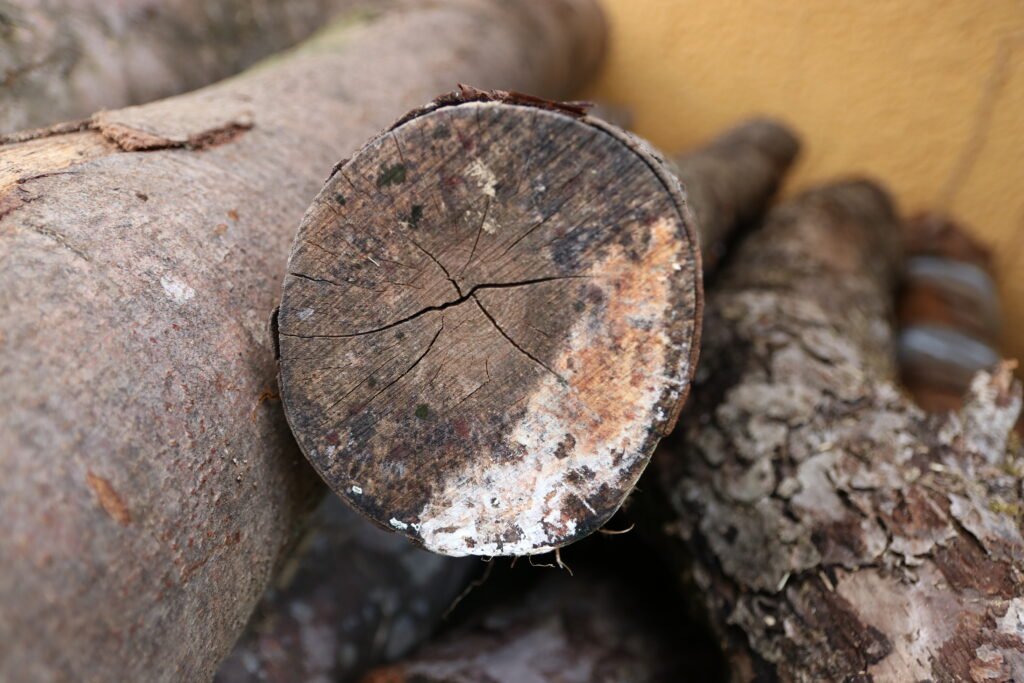
What convinced me about growing outdoors is that once a log is colonised, it produces mushrooms for several years with very little ongoing effort. The initial work is greater, but it pays off over time.
My experience with turkey tail in Schleedorf
To be honest, I didn’t have much patience on my first try with Trametes versicolor. I was used to oyster mushrooms, where the first pins appear after two weeks. With turkey tail, nothing happened. Weeks went by. The mycelium was there, white and healthy, but there wasn’t a single fruiting body.
My mistake was that I’d stopped providing enough humidity too soon. Trametes is more tolerant than some other species, but below 70% relative humidity it simply doesn’t get going. Once I corrected this and set up a separate, more humid area, the first fruiting bodies appeared, and I understood why people love this mushroom.
The colours surprised me. In my chamber with little daylight, the mushrooms stayed fairly pale, more white and light grey than the classic blue-grey and brown. With some indirect natural light, the colours became much more intense. That isn’t a quality problem, but it makes a visual difference if you’re selling them.
My view: For a side business, turkey tail is interesting as a basis for your own extracts or as a niche product for direct customers. It’s less suited to being your main fresh mushroom, and the long fruiting times make planning harder.
Common problems and how to fix them
Contamination
Mould (usually Trichoderma or Penicillium) most often comes from inoculation or incomplete sterilisation. Our contamination guide covers the common types. If it’s green mould, throw out the substrate. Don’t compromise. Yellowish or bluish discolouration can also be the mycelium’s own metabolic products, so look closely, smell it, and if in doubt, throw it out.
No fruiting despite full colonisation
The most common reason is low humidity, or CO₂ that stays too high because of poor air exchange. The mushroom needs fresh air and high humidity at the same time. It’s better to air and spray briefly two or three times a day than not to air at all and leave the tent closed overnight.
Long, finger-like growths instead of flat layers
This is a classic CO₂ problem caused by too little fresh air. Trametes versicolor then forms elongated, column-like structures instead of the typical flat brackets. Increase the air exchange and use a less airtight cover.
Outdoor logs dry out
This is especially critical in summer. Keep logs in the shade, water them regularly (at least about 25 mm of rain per week as a guide), and if in doubt, soak them briefly.
Turkey tail FAQ
How long until I can harvest?
In bags, allow 3–4 months from inoculation to the first harvest. On logs outdoors, expect at least 6–12 months.
Can I grow turkey tail in a flat?
Yes, if you have enough space and a way of keeping humidity constant. A simple plastic tent over the bag is enough to start with. Be aware that fruiting can release a lot of spores, so in a small flat you’ll need good ventilation.
What is the best substrate?
Hardwood sawdust (oak or beech) with no more than 5–8% wheat bran. Higher levels mainly raise the risk of contamination.
Can I grow Trametes versicolor from wild mycelium?
In theory, yes, but in practice it’s a lot of work. Without a pure culture and lab equipment, the risk of contamination when cloning wild mushrooms is high. To get started, buy certified grain spawn.
What’s the best way to dry harvested turkey tail?
Dry it in a dehydrator at 40–50 °C until completely crisp, then store it in airtight jars. That’s enough for tea. Extracts need extra steps.
Want to try growing mushrooms?
At Stoff’n you’ll find grow kits, grain spawn and inoculation dowels to get you started, all certified organic from Schleedorf, Salzburg.
Read more in our mushroom growing guides, or go straight to the liquid extracts at TaoVitalis.