By Sebastian Reindl · Stoff’n e.U., Schleedorf · about 10 min read
King oyster mushrooms are among the most interesting mushrooms you can cultivate. Chefs and food lovers seek them out, they can be hard to find at the market, and they behave quite differently from their relatives, the common oyster mushrooms.
In this guide, I’ll show you how to grow king oyster mushrooms at home or on a small farm, indoors and outdoors, from substrate to harvest. I also cover the most common mistakes and what you can learn from them.
Why grow king oyster mushrooms?
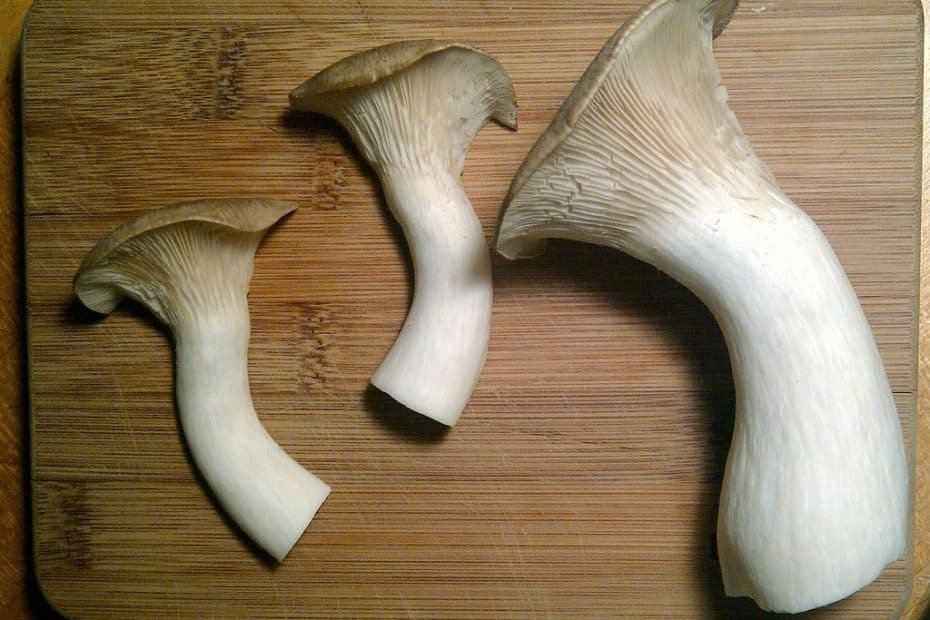
Pleurotus eryngii is related to the common oyster mushroom, but it grows differently and has different needs. Instead of forming clusters that grow out sideways, it develops sturdy individual mushrooms with a thick stem and a small cap. That distinctive look sets it apart in shops and restaurants.
Why is it worth growing?
- Strong demand from restaurants and delicatessens, with limited supply from local growers
- Keeps well compared with other fresh mushrooms
- Versatile in the kitchen: as a scallop substitute, fried, braised or dried
- An interesting niche market with room for a higher price
If you know our mushroom growing kits, you’ll know that king oysters aren’t as “set and forget” as oyster mushrooms. They need a little more attention, but they give more back.
Ways to grow king oyster mushrooms
There are several ways to cultivate king oysters. The right one depends on your experience and how much you want to grow.
Grow kit (beginners)
A ready-made grow kit is the easiest way in. The substrate is already fully colonised, so you only have to look after the fruiting stage. It’s a good way to get a feel for what king oysters need before you work with your own substrate.
Grow bags or substrate blocks indoors
This is the most common method for serious hobby growers and small farms. Autoclavable bags filled with sawdust substrate let you work cleanly and keep conditions under control. King oysters fruit from the top, so you can also grow them in bottles or monotubs.
Bottles (industrial)
Commercial producers often grow Pleurotus eryngii in bottles, which allows a high degree of automation. For home use or a small farm, this method takes more effort than bags and is less flexible.
Outdoor bed
This is possible, but it has limits. Results are less predictable, the mushrooms look different (larger, darker caps and short stems), and the season is limited. If you sell fresh mushrooms directly, outdoor beds work better as an addition than as your main method.
What you need
Spawn (mycelium)
You need king oyster grain spawn from a reliable supplier. Look for a proven strain, because cheap or badly stored spawn will catch up with you by the first batch at the latest. Our organic king oyster spawn is suited to sawdust substrates and comes from our own certified organic production.
For outdoor beds, sawdust spawn is better than grain spawn. Birds and small animals have little interest in wood chips, but a great interest in grain.
Substrate
King oysters grow on hardwood sawdust. Adding 10–15% wheat bran or rice bran improves yield and texture. Because this substrate is supplemented, it has to be sterilised. Pasteurising it isn’t enough.
Containers
Depending on the method, use autoclavable bags with filter patches, bottles or monotubs. For outdoor growing, a simple garden bed in a shady, moist spot is enough.
Pressure cooker or autoclave
You need one of these to sterilise the substrate. A household pressure cooker is fine for small amounts. Above a certain volume, an autoclave is worth the investment.
How long until harvest?
With a ready-made grow kit, expect about 14 days from opening to first harvest. The first pins usually appear after 4–8 days and then grow quickly.
If you make your own substrate, allow another 14–21 days for colonisation. The whole process from filling the bags to harvest takes about 4–6 weeks.
With good care, a substrate block can give 2–3 flushes, each 1–2 weeks apart.
Growing king oyster mushrooms indoors, step by step
Step 1: Gather your materials
Before you start, find out which hardwood sawdust is easy to get in your area. You’ll also need:
- King oyster grain spawn
- Hardwood sawdust (beech, oak or alder, not softwood)
- Wheat or rice bran (10–15% of the dry weight)
- Autoclavable grow bags with filter patches
- Pressure cooker or autoclave
- Scales, a bucket and a measuring jug
Step 2: Prepare the substrate
Mix: Combine the sawdust and bran while dry, then add water. Aim for about 60% moisture. As a rule of thumb, use 1.5 to 1.7 times the dry weight in water.
Squeeze test: Squeeze a handful of substrate firmly. No more than 1–2 drops of water should come out. If more comes out, it’s too wet. If no drops come out and the substrate falls apart, it’s too dry.
Sterilise: Sterilise for 3 hours at 15 PSI (about 121 °C). Then let it cool for at least 8 hours before inoculating.
Step 3: Inoculate
The recommended rate is 2–10% of the wet substrate weight. Higher rates speed up colonisation but use more spawn.
Cleanliness is crucial, so disinfect your work surface and hands. King oysters are more sensitive to contamination than oyster mushrooms, so a laminar flow hood or still air box is a good idea. Seal the bag firmly after inoculating.
Step 4: Incubate
Put the inoculated bags in a dark, warm place. 21–24 °C is ideal. The bags stay closed during this stage and don’t need watering.
After 2–3 weeks, the substrate should be completely run through with white mycelium. Then it’s time for fruiting.
Step 5: Fruiting
Start pinning: Cut open one corner of the bag rather than the whole top. Lower the temperature to about 15 °C and raise the humidity to 95–100%.
When the pins reach about 5 cm: Cut the bag open fully at the top of the substrate. Keep humidity at 85–88% and the temperature at 12–18 °C. Harvest should be 4–5 days away.
Important: Large swings in temperature or humidity make the young mushrooms abort. With king oysters, steady conditions aren’t a nice-to-have. They’re essential.
Step 6: Harvest
Harvest while the cap edges are still curled slightly inwards, before the caps flatten and drop spores. Gently twist the mushroom off at the base.
Fully grown king oysters can have stems up to 20 cm long and 5 cm thick.
Growing king oyster mushrooms outdoors
Growing outdoors takes less effort, but it’s also less predictable. Outdoor mushrooms have wider, darker caps and short stems.
Step 1: Materials and location
You’ll need sawdust spawn (not grain spawn, because birds eat the grain), wood chips and straw. Choose a shady, sheltered spot that’s easy to reach for watering.
Step 2: Make the bed
The best depth is 10–20 cm. A layer of cardboard on the ground slows weed growth. Use 5–10% spawn by fresh weight of the substrate.
Step 3: Layer and inoculate
Start with a base layer of wood chips. Spread sawdust spawn evenly over it, add more wood chips and the rest of the spawn, then finish with wood chips. Cover with a thick layer of straw to hold moisture and stop the bed drying out.
Step 4: Care and harvest
Keep the bed moist but not waterlogged. The first harvest can take from several weeks to months, depending on the weather and season. Protective netting can help keep out fungus gnats and small animals.
Common problems
Mushrooms abort (stop growing)
The most common cause is a sudden change in temperature or humidity. A draught, a door opening or a drop in temperature overnight can be enough.
Contamination (green, black or orange mould)
This is almost always caused by poor hygiene during inoculation or incomplete sterilisation. Remove contaminated bags from the growing area right away. Our mushroom contamination guide and inoculation guide explain how to prevent this.
Thin stems and large caps
This comes from too much fresh air and too little CO₂ early in fruiting. Open the bag later, or use a more enclosed fruiting chamber.
No pins despite full colonisation
King oysters often need a drop in temperature to start fruiting. Cooling them briefly to 12–15 °C usually helps.
King oyster mushroom FAQ
Can I grow king oysters on straw?
It’s technically possible, but I don’t recommend it. They give much better yields and quality on hardwood sawdust with bran.
Why are my king oysters growing so slowly?
Common causes are an incubation temperature below 18 °C, too little spawn or the wrong substrate moisture. King oysters are also generally a little slower than oyster mushrooms.
How should I store fresh king oysters?
They keep for 7–14 days in the fridge at 2–4 °C. Don’t store them in airtight containers. A paper bag or loosely opened plastic packaging is ideal.
Can I grow more from supermarket king oysters?
Sometimes, but it isn’t reliable, because the mycelium may be inactive or dead. For dependable results, always buy fresh spawn from a supplier.
How many harvests can I get from one block?
Usually 2–3 flushes. Keep the block moist between flushes and allow 1–2 weeks of rest. The first flush is usually the biggest.
Are king oysters good for beginners?
Partly. They’re more demanding than oyster mushrooms, but manageable with some basic knowledge. If you have no experience yet, start with a grow kit.
Want to go deeper?
Our courses cover substrate production, hygiene, fruiting conditions and selling your mushrooms, all taught from day-to-day work on the farm.