Mushroom Identification App: Why a Photo Isn't Enough
Almost every week someone shows me a phone photo: "The app says this is a blusher. Is that right?" My honest answer is usually: maybe. And that maybe is exactly the problem. A mushroom identification app is convenient, fast and getting better all the time. But when the question is whether something can go into the pan, a photo often isn't enough.
I work with mushrooms every day, but with cultivated ones, where I know exactly which species is growing in the substrate. The forest is a different story. A recent report by Swiss public broadcaster SRF took up this topic during the current mushroom season, and I want to pick up a few of its points and add my own experience.
What the SRF report says
The SRF report comes to a clear conclusion: unless you are an experienced forager, you should not rely on an app alone for identification, not even one that uses artificial intelligence. Mushroom experts agree that the apps are improving. But they are not reliable enough for a decision that, in the worst case, is a matter of life and death.
The report recommends a mushroom inspection service as the safer option. Switzerland has a dense network of them. SRF also points out that the death cap is responsible for up to 90 percent of fatal mushroom poisonings in Switzerland. People who survive a severe poisoning are often left with lasting damage, for example to the liver.
Why a mushroom identification app reaches its limits
The core problem: an app only sees what is in the photo. For many species, however, a reliable identification depends on features that can't be photographed at all, or that only show up once you dig the mushroom out and cut it open.
The habitat is missing
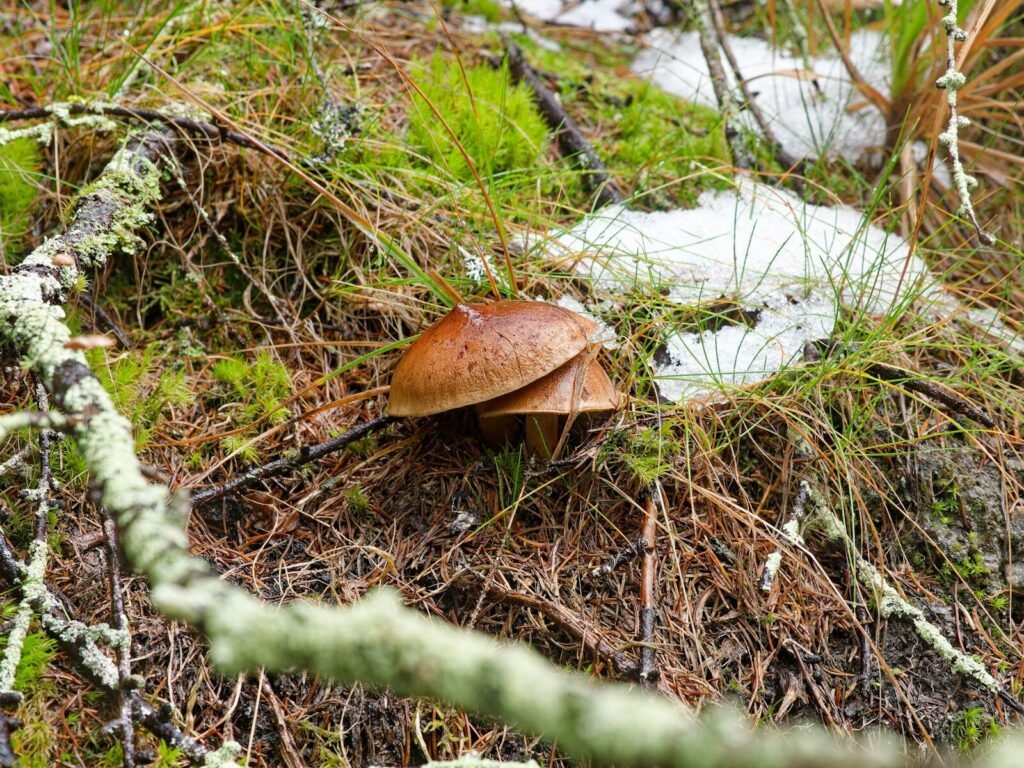
Which trees is the mushroom growing under? On wood or on the ground? Chalky or acidic soil? Many species form a fixed partnership with particular trees. That context can help rule out look-alikes. A close-up photo rarely shows any of it.
Smell and texture are missing
Does the mushroom smell of flour, of radish, sweet or unpleasant? Is the flesh firm, brittle, fibrous? Does it change colour after cutting? A camera has no nose and no fingers.
The stem base is missing
With the Amanitas in particular, the genus that includes the deadly death cap, an important feature often sits underground: the bulb with the remains of the universal veil. If you cut the mushroom off instead of carefully twisting it out, that feature is gone before the app has seen anything.
Blusher or panther cap? An example from practice
My favourite example of where photos reach their limits is the pair blusher (Amanita rubescens) and panther cap (Amanita pantherina). Both are Amanitas, both have a brownish cap with pale flakes on top, and on an average phone photo they often look confusingly similar.
The blusher is edible when thoroughly cooked, but poisonous raw. The panther cap is poisonous and can cause serious poisoning. The differences lie in details that can usually only be checked on the mushroom itself:
- Reddening: The blusher turns wine-red where it has been nibbled or damaged and at the stem base. This often takes a little while after cutting. The panther cap does not redden.
- Ring: On the blusher the ring is grooved on its upper side. On the panther cap it is smooth. From a photo taken from above, this is barely visible.
- Bulb: The panther cap has a bulb with a clearly defined rim. You only see it if the whole mushroom has been taken out of the ground.
None of these features can be read reliably from a single image. So the app guesses based on cap colour and flakes, and that is precisely where the two species look most alike.
No rule of thumb protects you from mix-ups
The SRF report stresses this too: there is no general feature that separates edible from poisonous mushrooms. Not all young mushrooms are harmless, and not all boletes are edible. Anyone who forages must know every species that goes into the pan with certainty, and by all its features, not just by the look of the cap.
Practical tips for mushroom season
If you forage in the woods
- Only take what you know for certain and want to eat. Leave everything else standing.
- Twist mushrooms carefully out of the ground instead of cutting them. The stem base is part of the identification.
- Use an airy basket, not a plastic bag. Mushrooms spoil quickly in plastic.
- Leave very young and clearly old specimens where they are.
- Never eat wild mushrooms raw, and cook your finds as soon as possible.
- If in doubt, see a mushroom advisor. In Austria, mycological societies and regional advice centres offer inspection appointments during the season.
- In Austria, the Forest Act generally allows up to 2 kg per person per day, unless the forest owner prohibits it.
- If you suspect mushroom poisoning, call the Austrian Poison Information Centre immediately: +43 1 406 43 43. Keep any leftovers and trimmings.
If you still want to use the app
- Treat the app as a learning aid, not as permission to eat.
- Take several photos: top of the cap, underside, stem, ring and the dug-out base.
- A suggestion from the app is a pointer to what you can read up on. Nothing more.
If you'd rather play it safe
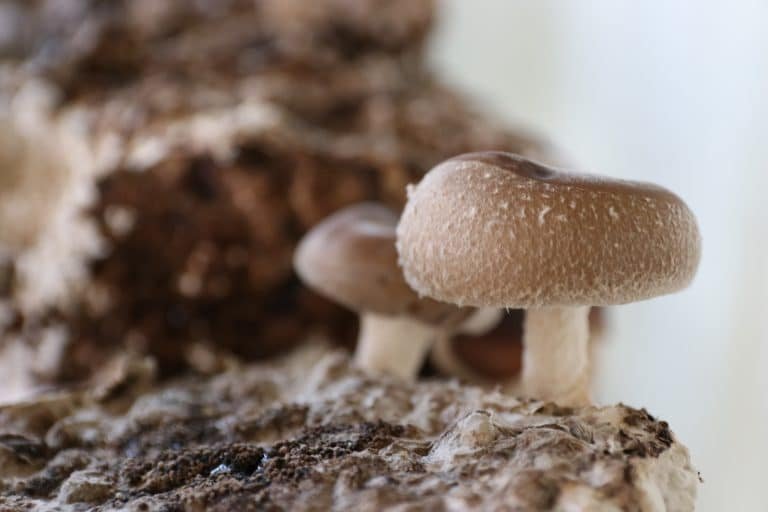
If you love eating mushrooms but aren't confident identifying them, you can grow your own. With oyster mushrooms or shiitake from a mushroom growing kit you know from the start what is growing. No mix-ups, no guesswork. And if you want to go deeper, our mushroom cultivation courses show you how mushrooms actually grow.
Conclusion
A mushroom identification app is a nice way in and can help you learn. For deciding whether a wild mushroom is edible, it isn't enough. Too many features, such as smell, discolouration, bulb or ring structure, stay invisible in a photo. Blusher and panther cap show this especially clearly. If you forage, really get to know your species, and when in doubt, go to a mushroom advisor.
You'll find more on mushrooms, cultivation and practical know-how in our journal.